
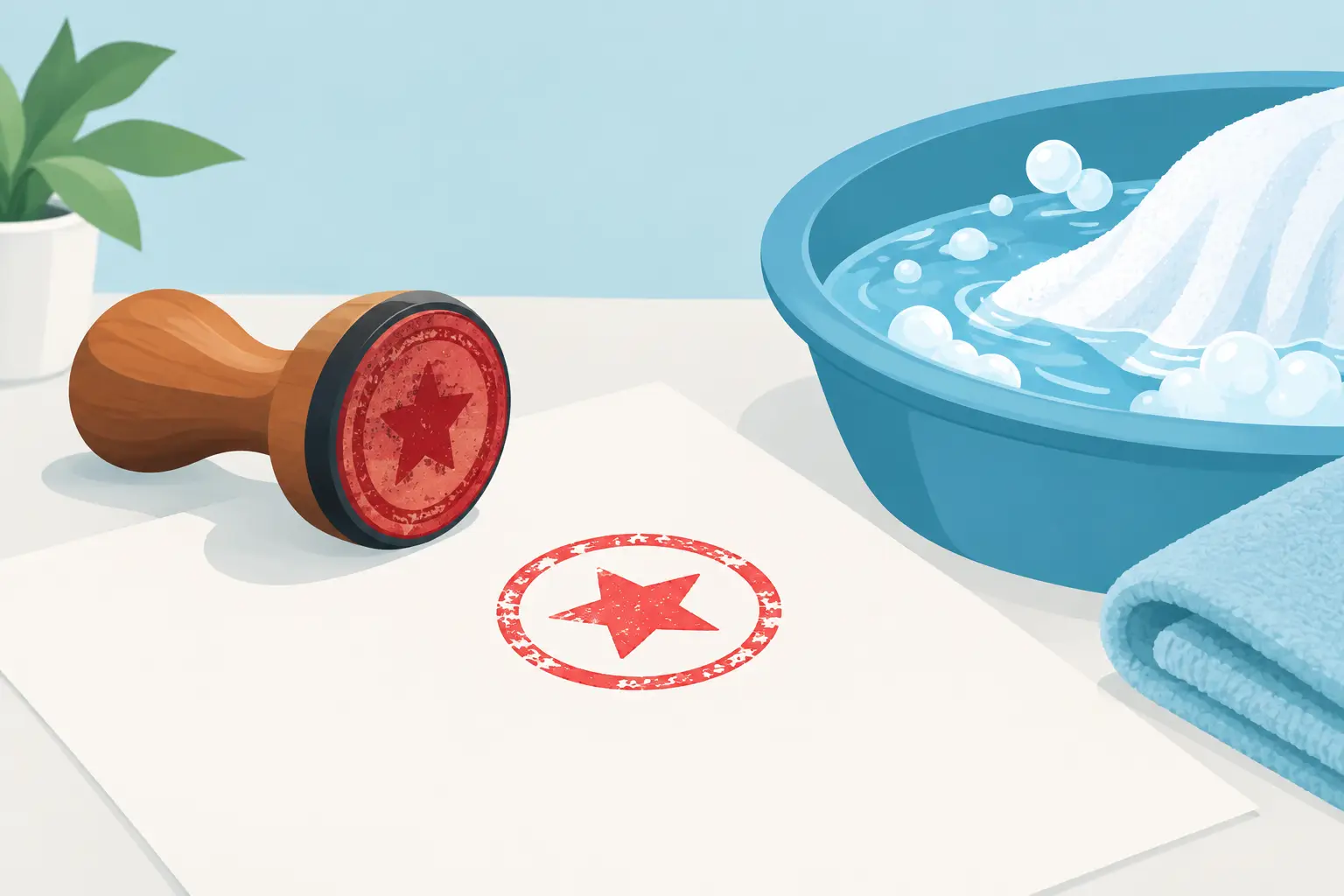
A hand stamp is useful only if it stays visible for as long as you need it to. So, do hand stamps wash off? Usually, yes – but how easily they wash away depends on the ink, the person’s skin, and what happens after the stamp is applied.
For an event entrance, the aim is normally simple: a clear mark that lasts through the day or evening, then comes off with ordinary washing. For workplace marking, packaging or paperwork, the requirements are completely different. The key is choosing an ink made for the surface you are stamping, rather than assuming every stamp ink is suitable for skin.
Do hand stamps wash off with soap and water?
Most hand stamps used for events are designed to wash off with soap and warm water. They are commonly made with cosmetic-grade or skin-safe ink, rather than permanent ink intended for paper, card, plastic or metal. A thorough wash may remove the mark straight away, although darker colours and detailed designs can leave a faint trace until the next wash.
It is normal for a hand stamp to withstand light contact during an event. Rain, sweat, hand sanitiser, rubbing hands together and frequent washing can all shorten its life. On dry skin, a well-applied event stamp may remain clear for several hours. On oily skin, freshly moisturised hands or hands that are washed regularly, it may fade sooner.
The practical answer is that a hand stamp should be temporary, but not necessarily instantly removable. If guests need to leave and re-enter a venue, test the ink in the conditions you expect before relying on it as the only method of admission control.
The ink makes the difference
Not all stamp pads contain the same type of ink. This matters more than the stamp itself.
A washable, skin-safe event ink is the appropriate choice for hands and is intended for temporary use. It should provide a crisp impression without requiring excessive pressure or repeated stamping. It is the right option for festivals, school fairs, clubs, parties, attractions and other entry-controlled events.
Water-based stamp inks can be easy to clean from skin, but they may smudge or fade too readily for a busy event. They are often better suited to paper and craft use unless the manufacturer specifically states that they are suitable for skin.
Permanent, solvent-based and industrial inks should not be used for hand stamping. They are made for demanding surfaces and can be difficult to remove, may irritate skin and are not intended for direct contact with guests. The same caution applies to inks designed for non-porous materials such as plastics, coated card, glass or metal.
If you are ordering a hand stamp for an event, check both parts of the setup: the stamp design and the ink pad. A custom stamp paired with the wrong ink is not a reliable hand-stamping solution.
How long should an event hand stamp last?
There is no fixed number of hours because real conditions vary. A stamp on a dry hand at an indoor evening event will generally last longer than one applied outside during warm weather, rain or physical activity.
For many organisers, the useful benchmark is whether the mark remains recognisable until guests are unlikely to need re-entry. A simple, bold design usually performs better than fine wording or a very detailed logo. Larger solid areas of ink can be highly visible, but they may also transfer more easily if they are not allowed a moment to dry.
Give each impression a few seconds before the person touches clothing, bags or drinks. Avoid applying the stamp over hand cream, sunscreen, damp skin or areas likely to be rubbed constantly. The back of the hand is usually the most practical location, as it is easy for door staff to check and less exposed to repeated washing than the palm.
A small test before doors open is worth the effort. Stamp a member of staff, leave the ink to dry, then see how it performs after hand sanitiser, a little water and normal movement. This gives you a more realistic answer than a label alone.
How to remove a hand stamp safely
Start with warm water and ordinary soap. Rub the stamped area gently for around 20 seconds, then rinse. If any colour remains, wash again rather than scrubbing aggressively. The mark often becomes much lighter after the first wash and disappears fully after a second wash or later that day.
For stubborn remnants of suitable temporary ink, a little baby oil, cleansing oil or an oil-based make-up remover can help loosen pigment before washing with soap. This is often kinder to the skin than repeated hard scrubbing. Follow the product instructions and stop if the skin becomes sore or irritated.
Avoid using harsh cleaning products, solvents, bleach, abrasive scourers or strong alcohol-based chemicals to remove a hand stamp. These can damage or dry the skin and are unnecessary for an ink that has been selected correctly for temporary skin use.
If someone experiences redness, itching or discomfort, wash the area promptly with soap and water and discontinue use of that ink. Anyone with sensitive skin, allergies or a known reaction to cosmetic products may prefer an alternative way to show entry, such as a wristband or ticket.
A clear stamp design helps more than extra ink
When organisers worry that a hand stamp will wash off, the temptation is to press harder or re-ink the stamp heavily. Neither is usually the best answer. Too much ink can blur the design, transfer onto clothes or create an uneven mark that is harder for staff to recognise.
A bold design gives better results. Choose uncomplicated artwork with strong lines, clear initials, a date, a simple icon or a distinctive logo shape. Fine print, narrow gaps and very small details can fill in when stamped, particularly after a long period of use.
A good stamp should deliver a readable impression with one firm, even press. Keep the hand still, press the stamp flat rather than rocking it, then lift it straight away. If the impression starts looking patchy during the event, re-ink the pad according to its instructions rather than pressing harder.
When a hand stamp is not the right choice
Hand stamps are efficient for short-term entry control, but they are not suitable for every situation. If an event lasts several days, involves swimming or heavy outdoor work, or requires strict proof of paid entry, a wristband, pass or barcode system may be more dependable.
They are also less suitable where guests are likely to wash their hands frequently, such as food events, childcare settings or activities involving paint and water. In these cases, a hand stamp can still be useful as a quick visual check, but it should not be the only record of admission.
For schools and businesses, it is worth separating event hand stamps from everyday office stamp pads. An ink that gives excellent results on forms, loyalty cards or packaging is not automatically appropriate for skin. Keeping pads clearly labelled prevents mistakes when several stamp types are in use.
Choosing a practical hand-stamping setup
Before ordering, consider the duration of your event, whether it is indoors or outdoors, the age of attendees and how staff will check the mark at the door. A visible colour and a straightforward custom design make checks quicker, particularly in low light or busy queues.
Ask whether the ink is specifically suitable for use on skin and how it should be removed. Also check whether it is likely to hold through the activity you are planning. This is particularly useful for large events, where a small trial can prevent delays and confusion later.
Handy Stamps can help organisers create clear custom designs that are quick to recognise and easy to apply. Pairing the right design with the correct skin-safe ink gives you a practical entry mark that does its job without becoming a nuisance once the event is over.
The best hand stamp is not the one that lasts forever. It is the one that remains clear when your team needs to check it, then washes away safely when your guests get home.