
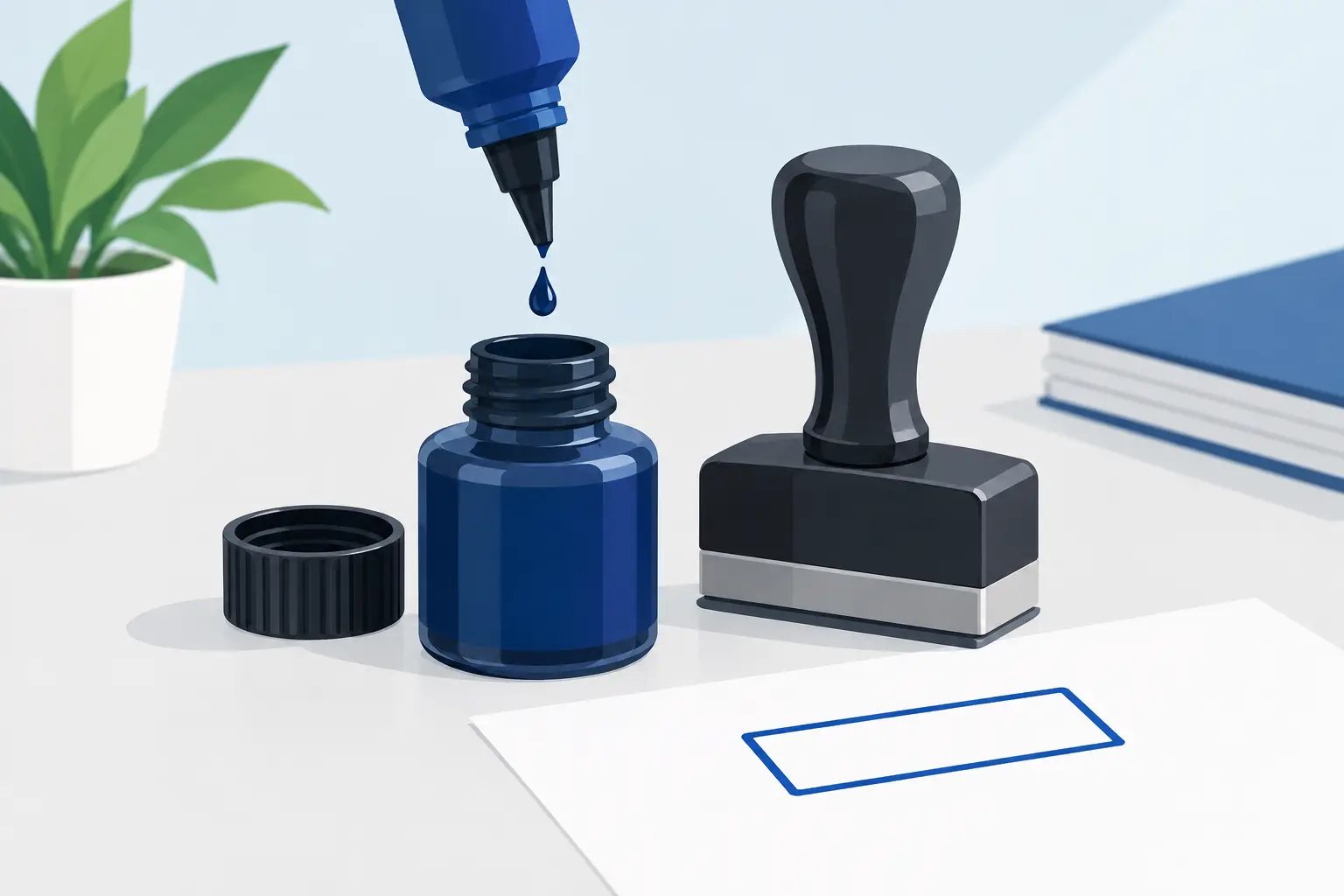
A faded impression can make an otherwise useful stamp frustrating to use. Whether you are marking pupils’ work, processing paperwork, updating service records or stamping loyalty cards, a suitable stamp ink refill restores clean, readable results without replacing a stamp that still works perfectly well.
The key is not simply adding more ink. Different stamp designs use ink in different ways, and the wrong refill can cause smudging, weak impressions or damage to the internal pad. With the correct ink and a careful application, most self-inking stamps can deliver thousands more consistent impressions.
When does a stamp need refilling?
A stamp usually gives a few clear warnings before the ink pad is empty. The impression may look pale around the edges, patchy across larger letters or noticeably lighter than usual. You may also find yourself pressing harder to get a usable mark. Pressing harder will not solve the problem and can make the impression less even.
Before refilling, check the stamp surface. Dust, paper fibres or dried ink on the rubber text plate can affect the result, even when the pad still contains ink. Wipe the rubber gently with a lint-free cloth and test it on plain paper. If the mark remains faint, a refill is likely needed.
For busy offices, classrooms and workshops, it is sensible to keep a compatible refill bottle or replacement pad available before the stamp runs dry. This prevents a small but disruptive hold-up in routines that rely on quick, repeat marking.
Choose the right stamp ink refill
Compatibility matters more than brand name alone. A self-inking stamp needs ink formulated for its internal pad, while a traditional hand stamp is used with a separate ink pad. Pre-inked stamps use another system again, with ink held inside the stamp body rather than on a removable pad.
Start by identifying the stamp type. A self-inking stamp has a mechanism that turns the rubber die onto an internal ink pad when pressed. Many models have a small pad that can be removed for replacement or refilling. A traditional wooden or hand stamp has no built-in ink source, so it needs an external pad. Pre-inked models generally need fewer refills, but they must be refilled using the correct method and ink.
Ink colour is also a practical decision. Black and blue are common for administration, records and everyday office use because they are easy to read and reproduce. Red is useful for urgent actions, corrections or payment reminders. Teachers may prefer a range of brighter colours for feedback, while event organisers often choose a colour that suits wrist or hand stamping requirements.
Do not assume that any bottle labelled stamp ink is suitable. Some inks are designed for porous materials such as paper and card. Others are intended for non-porous surfaces, including plastic, coated stock or metal. Using a solvent-based ink in a pad made for water-based ink can affect the pad material and lead to unreliable results. If you are unsure, check the stamp model and the intended surface before ordering.
Refill ink or replacement pad?
Both options can be useful. A refill bottle is economical when the existing pad is still clean, evenly shaped and in good condition. It is particularly suitable for stamps used regularly in offices, schools and small businesses.
A replacement pad is often the better choice if the pad has become contaminated, damaged or mixed with the wrong colour. It can also save time where several stamp colours are needed. For example, an office using one date stamp for routine records and another for overdue paperwork may find colour-coded replacement pads easier to manage.
The trade-off is straightforward: refilling costs less over time, while a fresh pad offers a quicker reset when print quality has declined for reasons beyond low ink.
How to refill a self-inking stamp
Most self-inking stamps are simple to refill, but work slowly and use only a small amount of ink. Overfilling is one of the main causes of blotchy impressions and ink leakage.
First, place scrap paper beneath the stamp and keep a cloth nearby. Press the stamp down slightly and engage its locking buttons, if fitted, to hold the mechanism in position. This normally reveals the ink pad so it can be slid out from the side or back of the housing.
Add a few drops of compatible ink across the pad, rather than concentrating it in one place. Larger pads may need a little more, but the aim is to moisten the surface evenly, not saturate it. Leave the pad for several minutes so the ink can absorb fully. Refit it in the correct direction, release the lock and make several test impressions on scrap paper.
If the first impression is still light, wait a little longer before adding more. Fresh ink often needs time to travel through the pad. If the stamp produces very dark, wet marks, leave it unused for a short period and continue testing on scrap paper until the excess has settled.
Avoid using household liquids, fountain pen ink or printer ink as a substitute. They are not made for stamp pads and may produce poor results or shorten the life of the mechanism.
Getting cleaner impressions after refilling
A good stamp ink refill should improve the result, but technique still matters. Place paperwork on a firm, flat surface and press the stamp straight down. Rocking it from side to side can blur fine print, especially on date stamps, small address stamps and detailed logos.
Allow the ink to dry before stacking or filing documents. Drying time depends on the paper, ink type and how heavily the pad has been filled. Smooth or coated paper may need longer than ordinary copier paper. For forms that are handled immediately, test the ink on the actual stock first.
If you use a stamp only occasionally, store it away from direct sunlight and strong heat. Heat can dry the ink and affect plastic stamp housings over time. Keep the stamp closed or capped where applicable, and store ink bottles upright with their lids properly tightened.
Cleaning is equally useful. A dry, lint-free cloth is usually enough for routine care. If the rubber text plate has a build-up of ink, use a suitable stamp cleaner sparingly and allow the surface to dry before use. Do not soak the stamp or leave cleaning fluid inside the mechanism.
Refill routines for different workplaces
For school staff, a lightly inked self-inking feedback stamp is usually easier to control than one that has been overfilled. Clear wording and a crisp image help pupils understand comments quickly, while a choice of colours can make repeated marking more engaging.
In offices, stamps used for received dates, paid invoices, copies and document handling need consistent legibility. A pale impression can create uncertainty in filing and audit trails, so checking high-use stamps at regular intervals is a simple administrative safeguard.
Garages and workshops benefit from clear, durable marks on job cards and service paperwork. Choose an ink that suits the paper or card used in the workflow, then keep the refill with other regularly used consumables. There is little value in a fast process if the required stamp is unusable halfway through the day.
For retailers and loyalty schemes, clean impressions matter because they represent the business as much as the card design does. Test the stamp on the actual loyalty card stock, particularly if it has a glossy finish. A different pad or ink type may be needed where standard ink takes too long to dry.
Common stamp refill problems and what they mean
Patchy marks after refilling usually mean the ink has not spread through the pad yet, or the pad is worn. Give it more time first. If the result does not improve, replace the pad.
Smudging usually points to excess ink, unsuitable paper or pressure applied at an angle. Make repeated test marks on scrap paper and let the stamp settle before returning it to normal use.
If a stamp suddenly changes colour, the pad may have been contaminated by another ink. Replacing the pad is generally more reliable than trying to correct the colour with more refill ink.
A stamp that will not produce a full impression may have a mechanical issue, particularly if it has been dropped or heavily used. Check that the pad is fitted correctly and that the rubber plate is clean. If the mechanism is worn, replacing the stamp may be more economical than repeated troubleshooting.
Keeping a stamp working well is usually a small job with a useful return. Select the compatible ink, add it sparingly and test before marking important documents. That little routine keeps everyday work moving and ensures every impression says exactly what it should.