If you are weighing up self inking vs pre inked stamps, the right choice usually comes down to one simple question – do you need speed for high-volume use, or the sharpest possible impression for a more polished finish? Both types are practical, reliable options, but they suit different jobs.
For office teams, teachers, garages, retailers and anyone handling repeat paperwork, that difference matters. A stamp that works brilliantly at a busy reception desk may not be the best fit for a detailed logo, fine text or customer-facing branding. Choosing well saves time, reduces mess and gives you a more consistent result day after day.
Self inking vs pre inked: what is the difference?
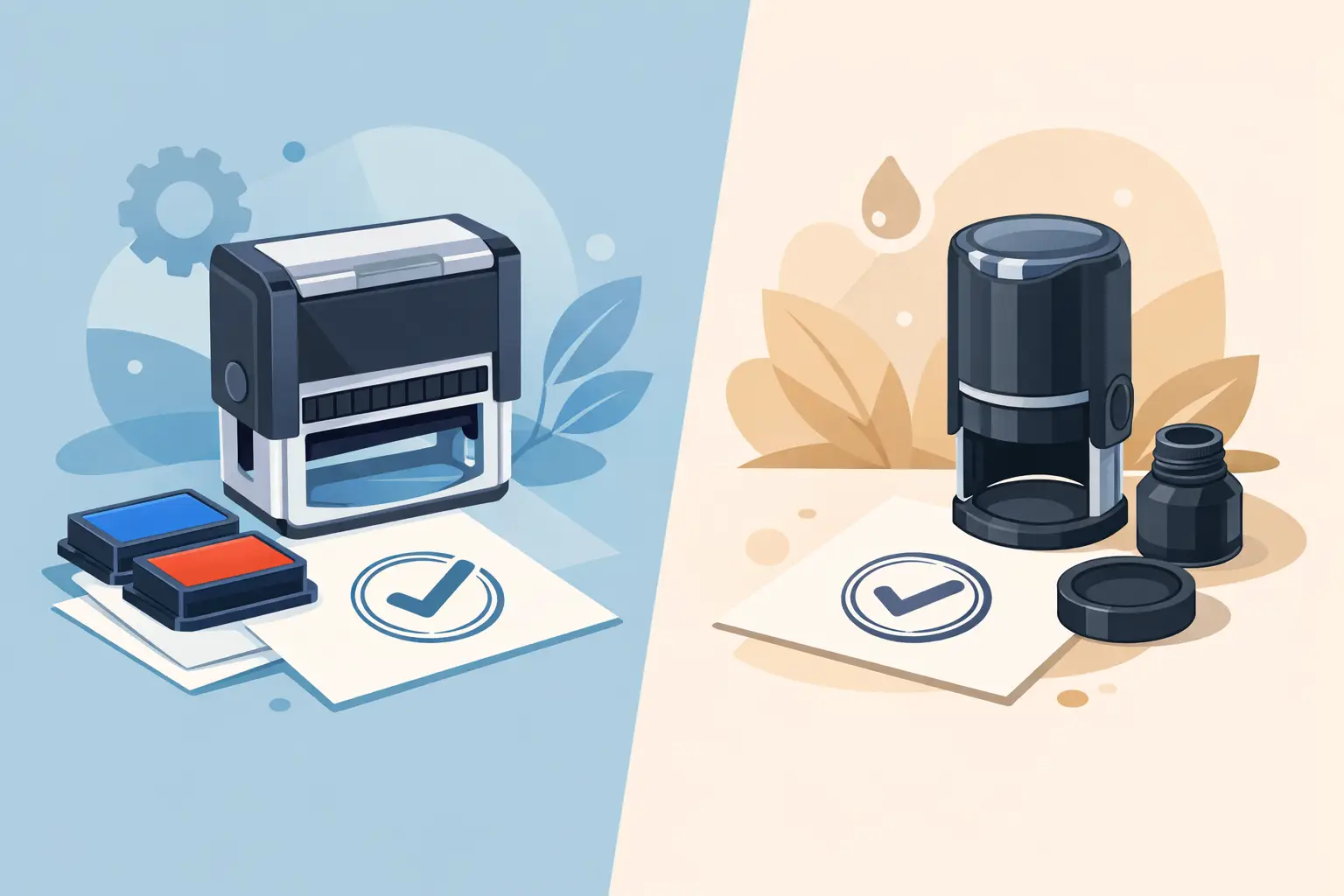
A self-inking stamp has an internal ink pad built into the mechanism. Each time you press it down, the rubber die rotates onto the paper after picking up ink from the pad. It is designed for fast, repeated use and is a familiar choice in offices, schools and admin settings.
A pre-inked stamp works differently. Instead of using a separate ink pad inside the housing, the stamp die itself holds the ink. That allows it to produce a cleaner, more detailed impression with less movement in the mechanism. In practical terms, pre-inked stamps are often chosen when appearance matters as much as speed.
Neither is universally better. The better option depends on what you are stamping, how often you use it and what sort of finish you expect.
When a self-inking stamp makes more sense
Self-inking stamps are built for routine work. If you are marking invoices, signing off documents, stamping dates, checking school books or processing standard forms all day, they are usually the more straightforward option.
The main advantage is speed. There is very little effort involved, and the action stays consistent even over long runs. That makes them especially useful in busy environments where several people may use the same stamp through the day. Office administrators, warehouse teams, school staff and garage operators often prefer self-inking models because they are practical rather than delicate.
They are also generally easier to maintain. Replacing or re-inking the pad is a familiar process, and for many standard text layouts they offer very good value over time. If the job is repetitive and functional, a self-inking stamp often does exactly what is needed without overcomplicating things.
There is a trade-off, though. The impression can be slightly heavier and less refined than a pre-inked stamp, especially with intricate artwork or very small lettering. That does not matter much for a basic PAID, RECEIVED or CHECKED stamp, but it can matter for branding or compact designs.
Where pre-inked stamps have the edge
Pre-inked stamps are often the better choice when you want a crisp, precise impression. They tend to produce cleaner detail, smoother coverage and sharper text, which is useful for logos, signatures, business branding and layouts with finer lines.
If your stamp is customer-facing, that extra definition can be worth having. A boutique retailer stamping loyalty cards, a solicitor marking formal paperwork, or an event organiser using a logo stamp may prefer the neater finish of a pre-inked model. They also tend to stamp more quietly and with less impact, which some workplaces appreciate.
Another advantage is the impression itself. Pre-inked stamps usually apply ink more evenly, so the result can look more controlled and professional. That is particularly noticeable when the design includes detailed graphics or when you want a premium look on packaging, cards or certificates.
The compromise is that they are not always the first choice for rough, constant, high-speed use. They can still handle frequent stamping, but many operational users find self-inking models more forgiving in fast-paced shared environments. Re-inking also needs a bit more care, as you are adding ink directly into the stamp rather than changing a simple internal pad.
Print quality: how much does it really matter?
For many customers, print quality is the deciding factor in self inking vs pre inked. If your stamp only needs to be readable and consistent, both types can do the job well. But if you need fine detail, pre-inked usually comes out ahead.
That difference is easier to spot in some designs than others. Large block text and simple wording often look perfectly good on a self-inking stamp. Small fonts, detailed logos and compact multi-line layouts tend to benefit from the sharper definition of a pre-inked version.
Paper type also plays a part. On ordinary office paper, both perform well. On smoother stock or materials where detail stands out more clearly, the cleaner finish of a pre-inked impression can be more noticeable. So if presentation matters, it is worth thinking beyond the stamp itself and considering what you are stamping onto.
Durability, refilling and day-to-day upkeep
From a maintenance point of view, self-inking stamps are often seen as the simpler working tool. When the print starts to fade, the ink pad can usually be replaced or re-inked with minimal fuss. That is useful in workplaces where the stamp needs to stay in circulation and downtime is inconvenient.
Pre-inked stamps can last for many impressions before they need more ink, but when they do need refilling, the process is a bit more specific. You need the correct ink and the right method to avoid over-inking or affecting the quality of the impression. That is manageable, but it is less foolproof.
Durability also depends on how the stamp is treated. In a busy shared workspace where the stamp is handled by different people, dropped into drawers and used quickly, a self-inking model is often the more practical choice. In a controlled environment where one person uses it carefully for more precise work, a pre-inked stamp can be an excellent long-term option.
Cost and value over time
Price matters, especially if you are ordering for a team, department or multi-site business. In many cases, self-inking stamps offer strong value because they are efficient, widely used and straightforward to maintain. For everyday text stamps, they are often the economical choice.
Pre-inked stamps can sometimes cost a little more depending on the design and specification, but that extra cost may be justified if the quality of the impression is central to the job. A sharper logo stamp that supports a better presentation can be worth more than a cheaper option that looks less professional.
The best way to think about value is to match the stamp to the task. If the stamp supports internal admin, speed and convenience may matter most. If it supports branding, packaging or customer experience, impression quality may be the better investment.
Which stamp is best for your type of work?
In schools and offices, self-inking stamps are often the obvious fit because they are quick, clean and easy to keep using across the day. Date stamps, standard message stamps and teacher stamps are common examples where practicality comes first.
For garages, workshops and trade counters, the same logic often applies. When you need to mark service books, job sheets or routine paperwork repeatedly, self-inking stamps handle the pace well and keep things moving.
Pre-inked stamps come into their own when detail matters more. They are a strong choice for branded impressions, fine signature stamps, loyalty card stamps, event stamps and designs where a neat finish is part of the purpose. They can also suit personal and occasion-based uses, such as wedding or christening stamps, where appearance carries more weight.
If you are unsure, think about volume first and design second. High-volume, straightforward text usually points towards self-inking. Detailed artwork, smaller text and presentation-led use often point towards pre-inked.
Self inking vs pre inked: the better choice depends on the job
There is no single winner in self inking vs pre inked stamps because they are built for slightly different priorities. Self-inking stamps are dependable workhorses for fast, repeated marking. Pre-inked stamps are better where detail, finish and a more precise impression matter.
At Handy Stamps, that is usually how customers make the decision in practice. They are not choosing between a good option and a bad one. They are choosing between two useful tools that suit different working patterns.
If your stamp needs to keep up with a busy desk, classroom or workshop, self-inking is often the safer bet. If you want your impression to look especially crisp on every card, document or package, pre-inked is likely the better fit. A few seconds spent choosing the right type now usually saves a lot of frustration later.