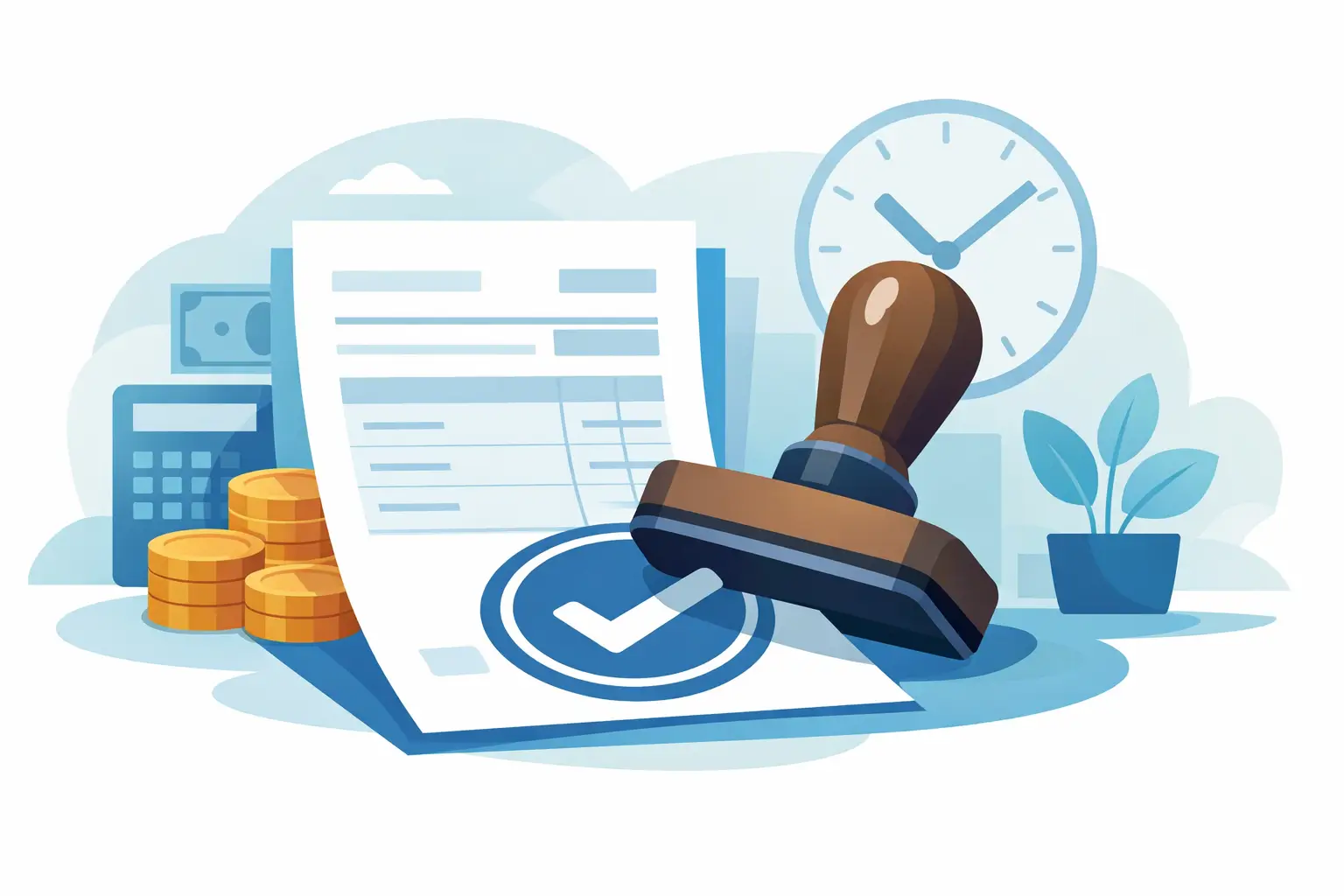
An invoice marked as paid should settle the matter. In practice, it often creates a new question – who marked it, when was it checked, and can anyone else see that status at a glance? That is where a paid stamp for invoices earns its place. For busy offices, accounts teams and small businesses, a clear stamp can cut down repetitive handwriting, reduce confusion and keep paperwork moving.
Why a paid stamp for invoices is still useful
Even with accounting software doing much of the heavy lifting, paper invoices have not disappeared. Many businesses still print copies for filing, attach paperwork to delivery notes, or keep physical records for internal checks. In these settings, a handwritten “paid” note can work, but it is not always quick or consistent.
A stamp gives you the same wording every time. That matters more than it might seem. When invoices pass between admin staff, finance teams, managers and auditors, a clean and obvious mark helps everyone read the document in seconds. It also reduces the chance of an invoice being processed twice or left in the wrong pile.
For firms with regular invoice volumes, the time saving adds up quickly. Writing “paid”, adding a date and initialling each document may only take a moment, but repeated dozens of times a day, it becomes a task worth simplifying.
What a paid invoice stamp actually helps with
The main benefit is visibility. A paid invoice stamp makes the status of the document clear the moment it is picked up. That sounds basic, but basic systems are often the ones that keep an office running properly.
There is also a consistency benefit. Different staff members write notes in different ways. One person writes “settled”, another writes “paid 03/12”, and someone else scribbles initials that nobody can read. A standard stamp creates one recognisable mark across the business.
For businesses handling supplier paperwork, customer account files or expense documents, that consistency can make filing much easier. It supports tidier records, quicker checks and fewer avoidable questions.
When a paid stamp makes the most sense
Some businesses will get more value from a paid stamp than others. If your whole process is fully digital and invoices are never printed, a physical stamp may not add much. But many workplaces still sit somewhere in the middle, using both digital records and printed paperwork.
A paid stamp is especially useful in accounts departments, reception-based offices, schools, legal firms, garages, workshops and small businesses where invoices are checked and filed by hand. It also suits teams where more than one person handles paperwork, because a visible stamp reduces reliance on memory or verbal updates.
If you process only a handful of invoices each month, handwriting may be perfectly adequate. If you handle regular batches, need a cleaner filing system or want documents marked in a uniform way, a stamp is usually the better option.
Choosing the right paid stamp for invoices
The best stamp depends on how your paperwork moves through the business. There is no single answer for every office.
Self-inking or traditional hand stamp?
A self-inking stamp is usually the most practical choice for invoice marking. It is quick to use, keeps the impression neat and avoids the need for a separate ink pad. For desks where invoices are stamped throughout the day, this is the straightforward option.
A traditional rubber stamp with a separate pad can still work well, particularly if you prefer replacing ink colours or use several stamps less frequently. It may also suit businesses already using hand stamps for other admin tasks. The trade-off is speed and convenience. For repeated daily use, self-inking tends to be easier.
What wording should you include?
The simplest version is just PAID. For many businesses, that is enough. It is bold, clear and immediately understood.
Some teams prefer a paid stamp with space for a date and initials. That gives better traceability, especially where invoices are approved by more than one person or checked later as part of reconciliations. Others add wording such as “Paid on” or “Date paid” to guide staff towards consistent record keeping.
There is a balance to strike here. Too little information can make follow-up harder. Too much wording can clutter the mark and slow the process down. For most invoice workflows, “PAID” with room for a date is a sensible middle ground.
Does size matter?
Yes, because the stamp needs to be easy to spot without covering key invoice details. A mark that is too small can be missed in a stack of paperwork. One that is too large may obscure figures, payment references or supplier information.
A compact to medium stamp is normally best for invoices. It should stand out clearly while still leaving the document readable. If you are stamping a wide range of paperwork, including small receipts or narrow account forms, it is worth checking that the chosen size works across all of them.
Design points that improve everyday use
A good office stamp is not just about the wording. It should work reliably in real conditions, on busy desks, in shared admin spaces and during repetitive use.
Clear lettering matters more than decorative styling. A plain, legible font gives the best result on invoices, especially when paper quality varies. Strong contrast is also useful. Traditional red or blue ink can make a paid mark stand out, though black may suit businesses that want a more formal look. There is no fixed rule here – readability is the priority.
Durability counts too. If the stamp is used frequently, a solid self-inking mechanism will save frustration over time. A clean impression on the first press is what people notice. If staff need to stamp twice to make it readable, the process slows down and paperwork starts to look untidy.
Paid stamp for invoices and audit trails
A stamp is helpful, but it should not be mistaken for a complete payment record on its own. It is a visual marker, not a replacement for proper accounts procedures.
That is why many businesses combine a paid stamp with internal references such as payment dates, ledger updates or initials from the person who processed the invoice. Used this way, the stamp becomes part of a wider paper trail rather than a standalone system.
This is where custom wording can be useful. A stamp that includes space for date and initials supports accountability without making the document hard to read. For organisations that need stronger internal controls, that extra structure is often worth having.
Common mistakes to avoid
The most common issue is choosing a stamp that is too vague for the job. A plain “PAID” mark looks tidy, but if your team later needs to know when payment was made or who handled it, you may end up adding handwritten notes anyway.
Another mistake is ordering a stamp that is too large or too faint. Invoice paperwork can already be crowded with figures, addresses and VAT details, so the mark needs to be clear without taking over the page.
It is also worth thinking about who will use the stamp. If several people share it, keep the wording neutral and practical. If one accounts clerk handles all processing, a simpler format may be fine. The right choice depends on your workflow, not just the look of the stamp.
A simple tool that saves time
In a busy office, small efficiencies are often the ones that stick. A paid invoice stamp will not transform your entire accounts process, but it can remove one repetitive task, make documents easier to read and reduce the chance of avoidable mix-ups.
That is why so many businesses still rely on them. They are quick, affordable and easy to fit into existing routines. For teams that want paperwork marked clearly and consistently, a custom paid stamp for invoices is a practical upgrade rather than an unnecessary extra.
If your current system relies on handwritten notes and crossed fingers, a well-made stamp is a simple way to bring a bit more order to the desk.