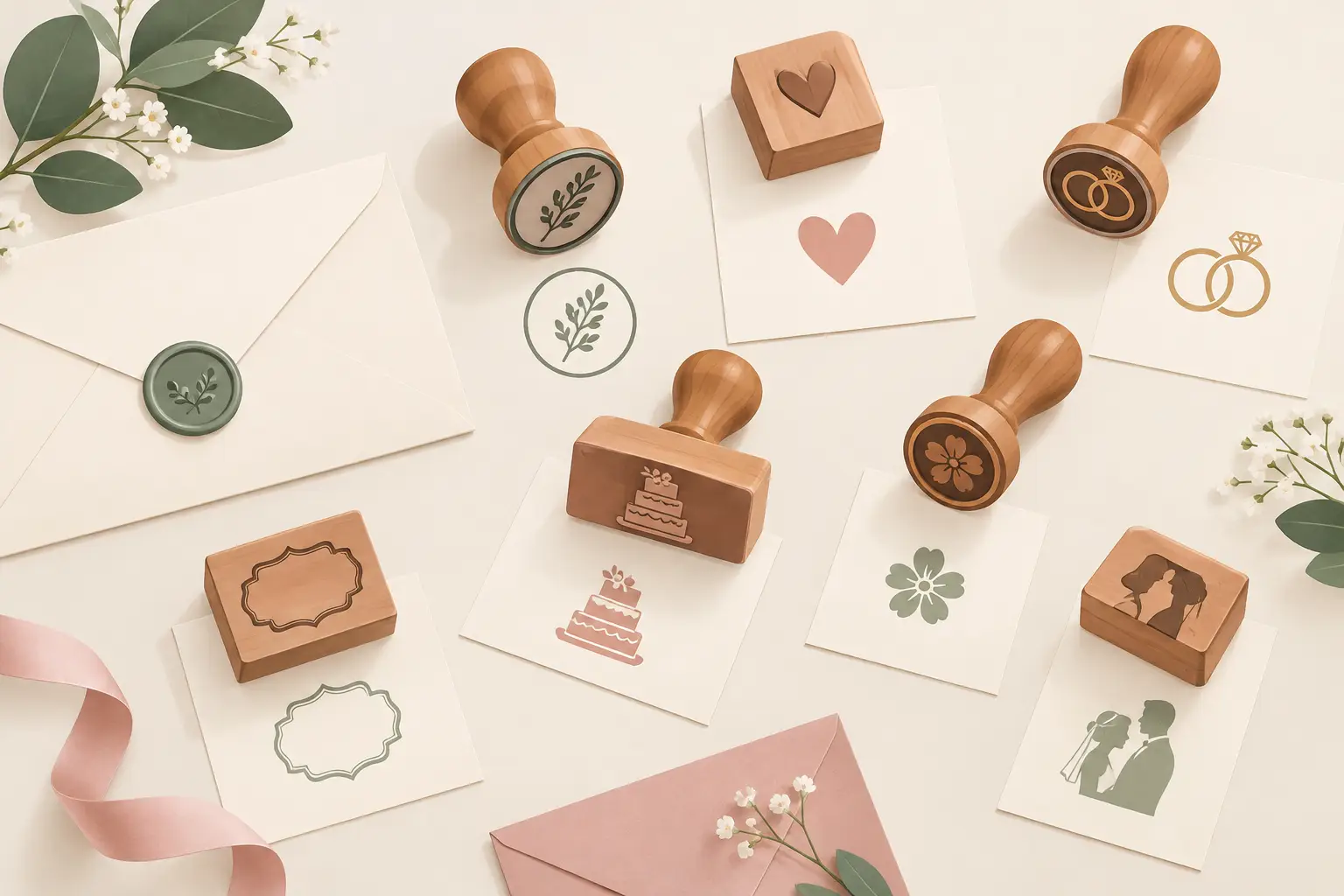
A wedding stamp can do far more than decorate an envelope. The best wedding stamp ideas give your stationery, favours and finishing touches a consistent look without adding hours of handwriting or expensive bespoke printing. A well-chosen personalised stamp is also useful before and after the day itself, from save-the-dates to thank-you cards.
The most practical choice depends on where you will use it. Paper invitations need a crisp, detailed impression; favour bags may need a bolder design; and place cards usually benefit from a smaller mark that does not compete with the guest’s name. Starting with the job the stamp needs to do makes the design, size and ink choice much easier.
1. A names-and-date wedding stamp
A stamp featuring both names and the wedding date is the most versatile option. It works on invitation envelopes, order-of-service covers, favour tags, thank-you notes and keepsake packaging. If you want one stamp to carry through the whole celebration, this is usually the best place to start.
Keep the wording simple. First names joined by “and” or an ampersand, followed by the date, tends to remain clear at smaller sizes. A full formal name layout can look elegant, but very fine text may lose definition on textured card or uneven surfaces.
2. A monogram for understated stationery
A monogram combines initials into one compact design. It is a sensible choice for couples who prefer a subtle, classic finish rather than a large decorative motif. Use it on the back flap of envelopes, menu cards, napkins, vellum wraps and small favour labels.
Monograms are particularly useful when your wedding has a defined style. A clean serif typeface suits traditional stationery, while a simple modern layout works well for contemporary celebrations. Avoid overly intricate flourishes if you will stamp small items, as the detail can fill in with ink.
3. A return-address stamp for invitations
Posting invitations is one of the least glamorous parts of wedding planning, especially when there are dozens to send. A return-address stamp keeps every envelope neat and saves writing the same details repeatedly. It can include your names, house number, street, town and postcode, or a shorter format if space is limited.
This is one of the best wedding stamp ideas for couples planning a larger guest list. It also remains useful after the wedding, unlike a date-specific design. For this reason, some couples choose a separate address stamp alongside a more decorative wedding stamp.
4. A save-the-date stamp
For informal save-the-dates, a stamp can replace printed cards altogether. Stamp a simple message onto good-quality postcards or card blanks, then add the venue area or a short note by hand. This approach feels personal while keeping costs manageable.
A larger design works best here because the main message needs to be immediately readable. Include the date and names, but leave room for a clear call to action such as “Save the date”. If the venue is not confirmed, do not add details you may need to change later.
5. A venue illustration stamp
A line drawing of a church, town hall, barn, country house or local landmark gives wedding paper goods a recognisable focal point. This option suits couples who have chosen a venue with character and want their stationery to feel specific to the day.
The trade-off is that a bespoke illustration is less flexible than a names-and-date design. It is ideal for invitations, welcome cards and keepsakes, but may be too detailed for tiny tags. Choose a clear black line illustration rather than shaded artwork for a cleaner rubber-stamp impression.
6. A botanical or seasonal motif
Flowers, leaves and seasonal shapes can tie together wedding stationery without printing every item in full colour. Think olive branches for a Mediterranean feel, wildflowers for a summer celebration, autumn leaves for an October date, or a sprig of holly for a winter wedding.
A motif stamp is especially helpful if you are assembling invitations and table details yourself. Use it as a border detail on menus, on the corner of table numbers or on plain paper bags for confetti. It does not need to include names, so it can also be used alongside other personalised stamps.
7. A stamp for favour bags and boxes
Plain kraft bags, white paper bags and small card boxes can look considered with a simple favour stamp. A short message such as “A little treat for you”, “With thanks” or your initials gives the packaging a finished appearance without ordering printed packaging in large quantities.
Choose a bolder design than you would for an envelope. Favour packaging is often handled more and may have a slightly uneven surface, so thick lines and clear lettering produce better results. Test the stamp on the exact bags or boxes before working through the full batch.
8. A thank-you stamp for after the wedding
Thank-you cards are often sent weeks after the day, when the last thing you need is another complicated task. A stamp with a simple “Thank you” message, your names and wedding date gives plain cards a personal finish and speeds up the process.
You can use one general design for everyone, then write a specific message inside each card. This offers a good balance between efficiency and genuine appreciation. If you expect to send thank-you cards for engagement gifts, hen or stag celebrations and wedding presents, this stamp earns its place quickly.
9. A guest-book or photo-booth stamp
For a relaxed reception, use a stamp beside the guest book with a prompt such as “Leave us a note”, “Sign our story” or “Share a memory”. It directs guests without needing a separate instruction sign and adds a coordinated detail to the table.
A photo-booth stamp can work in much the same way. Stamp blank cards for guests to add alongside photographs, or use it on the front of a keepsake album. Keep the message short and use a size that is easy for guests to see from standing height.
10. A table stationery stamp
Table names, menu cards and place settings can become expensive when each item is professionally printed. A personalised stamp gives you a repeatable element across the table without making every piece identical. For example, stamp a floral motif at the top of menus and use matching details on table-number cards.
For place cards, a small motif or monogram works better than a full names-and-date stamp. The guest name should remain the clearest part of the card. If you are using dark card, test metallic or opaque ink first, as standard ink pads are designed primarily for pale, absorbent surfaces.
11. A wedding welcome-bag stamp
Welcome bags are common for destination weddings, weddings with many travelling guests and weekend celebrations. A stamp is an efficient way to personalise bags containing a timetable, snacks, local information or recovery supplies.
Use a friendly, practical message such as “Welcome to our wedding weekend” with your names and date. Paper bags and kraft boxes take ink well, but coated gift bags can be more difficult. Allow extra drying time and handle them carefully to prevent smudging.
12. A stamp for handmade finishing touches
A small personalised stamp is useful for the details that do not always appear on a planning checklist: wax-seal backing cards, cake-box labels, reserved-seat signs, children’s activity packs and cards for suppliers. It brings a repeated visual element to mixed materials and helps handmade items look intentional rather than improvised.
This is where a compact monogram or motif gives the best value. It is quick to apply and does not need to carry every piece of wedding information each time.
Choosing the right stamp size and type
For most wedding uses, the design should be sized around the item rather than the artwork you like best. A small stamp is suitable for tags, place cards and envelope flaps. A medium stamp is more flexible for invitations, favour bags and thank-you cards. Larger stamps suit welcome signs, paper bags and save-the-date cards, provided the design is not too detailed.
Traditional hand stamps are a good fit for wedding projects because they can be used with different ink-pad colours. This gives you more control over your palette and makes it possible to use the same stamp on cream card, kraft paper and coloured tags. A self-inking stamp is quicker for high-volume, single-colour work, such as return addresses, but it is less adaptable if you want to change colours.
Get a clean impression every time
Good results are mainly about preparation. Place card or paper on a firm, flat surface, apply even pressure and lift the stamp straight up rather than rocking it. Too much ink can blur fine lettering, so press lightly onto the pad and make a few test impressions first.
Buy enough blank material to allow for practice and the occasional imperfect print. It is sensible to stamp invitations, tags or bags before assembling them, particularly if glue, ribbon or folded edges would make the surface uneven. Store the stamp clean and dry after use so it is ready for thank-you cards or future celebrations.
A wedding stamp works best when it solves a real task while adding a detail that feels like yours. Choose one that you will enjoy using across several parts of the day, then test it early on the materials you have chosen. That small preparation usually makes the finished result look calm, consistent and properly considered.