A queue at the door is not the place for handwritten lists, smudged stickers or explanations about who has already paid. The best personalised stamps for events give organisers a quick, clear way to manage entry, identify guests and add a considered detail to the occasion. The right choice depends on whether the stamp needs to work on skin, paper, packaging or cards – and how many impressions it must produce before the day is over.
For a busy public event, speed and visibility matter most. For a wedding, christening or baby celebration, the design and the quality of the finished impression may take priority. Looking at the practical job first makes the decision much easier.
Best personalised stamps for events: start with the job
There is no single stamp that suits every event. A hand stamp used for re-entry at a music night has a very different purpose from a personalised stamp used on wedding favour bags. Before choosing a size, shape or artwork, decide what the stamp has to do.
For door control, a compact hand stamp with a simple, recognisable design is usually the best option. It lets staff mark attendees quickly, helps prevent unauthorised re-entry and avoids the cost and waste of single-use wristbands where these are not needed. A bold icon, initials or a short event name is more effective than a detailed logo that may be difficult to recognise at a glance.
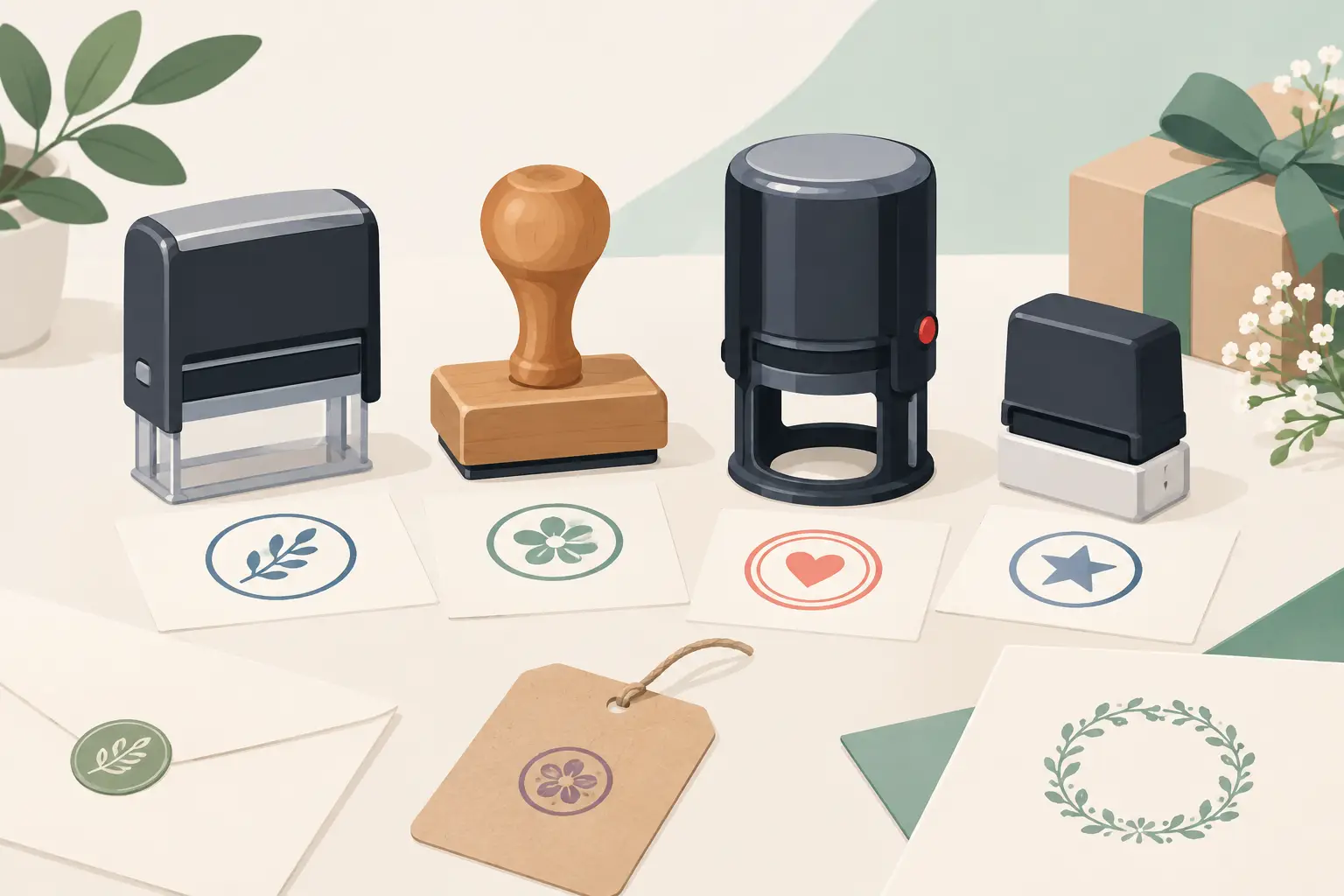
For table stationery, invitations, loyalty-style event cards or thank-you notes, a self-inking stamp is often more convenient. The ink pad is built into the unit, so there is less handling during preparation and less risk of using an unevenly inked pad. This is particularly useful when stamping hundreds of envelopes, place cards or paper bags before a celebration.
For wedding, christening and new baby details, a traditional wooden-handled stamp can be the more flexible choice. It allows different ink colours to be used for different materials and gives a more handcrafted finish. It does take a little longer to use, as the stamp must be inked separately, but that trade-off is worthwhile when the appearance of every impression matters.
Choose the right stamp format
Hand stamps for entry and re-entry
Hand stamps are built for fast use at doors, gates and activity areas. They work well for ticketed evenings, family fun days, festivals, school fairs, club nights and private events where guests may leave and return.
Keep the artwork simple. Solid shapes, short wording and strong contrast produce the clearest mark. Fine lines, tiny dates and long website addresses can become unclear, especially when applied quickly. If the mark will be checked in dim lighting, choose a design that staff can recognise without having to inspect every hand closely.
Ink suitability should be checked carefully when stamping skin. Use ink intended for hand stamping and follow the supplier’s guidance. Test it before the event, particularly if guests include children or if there may be sensitivities. A useful hand stamp should be visible enough for security, but comfortable and straightforward for guests.
Self-inking stamps for event paperwork
A self-inking stamp is a practical all-rounder for paper-based event tasks. It is well suited to stamping raffle tickets, programmes, discount cards, attendance slips, loyalty cards, event passes and packaging. The mechanism delivers consistent impressions with a simple press, which keeps preparation moving when there is a large quantity to get through.
This format is especially helpful where several volunteers or members of staff are involved. There is no separate ink pad to misplace and no need to judge how much ink is on the stamp each time. For repeat use, it is a tidy, efficient option.
The limitation is material choice. Self-inking stamps are mainly designed for standard paper and card. If you need to stamp textured kraft packaging, fabric, glossy surfaces or uneven materials, a traditional stamp with a suitable separate ink pad may give better results.
Traditional stamps for a personal finish
A personalised traditional stamp is a strong choice for occasions where every detail is part of the presentation. Couples often use them on save-the-date cards, envelopes, favour boxes, menu cards and thank-you notes. They are equally useful for christening invitations, baby shower bags and small business event packaging.
Because you choose the ink separately, you have more control over the final look. Black ink gives a clean, formal result, while muted colours can complement a wedding palette or party theme. Metallic and specialist inks may also be an option for suitable materials, although testing first is essential.
A wooden stamp is slower for high-volume door work, but it is not meant for that job. Its strength is flexibility and a more considered impression on the pieces guests will keep.
Get the design right before ordering
A good event stamp design has one clear purpose. It should either identify, inform or decorate. Trying to make it do all three can result in an overcomplicated impression.
For entry stamps, use a symbol or short phrase that is easy to spot. A date can be useful where events run regularly, but only if it remains large enough to read. For branding, use a simplified version of a logo rather than squeezing in every part of the original artwork.
For personal occasions, names and dates are often enough. A monogram, a small floral element or a simple illustration can add character without making the text difficult to read. Think about the smallest item you plan to stamp. A design that looks attractive on an A5 invitation may be too detailed for a favour tag.
Stamp size should follow the available space. Small stamps are neat for labels, tags and envelopes. Medium sizes work well on cards, bags and programmes. Larger designs suit posters, packaging or highly visible event materials, but can look heavy on small stationery.
Ink, surface and testing: the details that save time
The stamp itself is only part of the result. Paper type, ink choice and pressure all affect how the final impression looks. Smooth uncoated card usually stamps cleanly. Highly textured paper can create broken lines, while glossy card may need specialist ink and longer drying time.
If you are stamping an important batch of invitations or event materials, test on the actual stock first. This shows whether the design is legible, whether the ink bleeds and whether the colour suits the material. It also helps you decide how much pressure is needed. Pressing too hard can blur the edges; a firm, even press is normally enough.
Allow drying time before stacking items, particularly with darker inks or coated surfaces. This small step prevents transfer marks and avoids redoing work just before an event. Keep a few spare pieces of stationery or packaging to one side as well, as even careful preparation can produce the occasional imperfect impression.
Order for the scale of the event
A stamp is a repeat-use tool, so it can be more cost-effective than labels or printed extras for events that run regularly. This is useful for venues, schools, clubs, community groups and small businesses holding workshops or promotional days throughout the year.
For a one-off celebration, the value may be in the keepsake as much as the preparation. A personalised wedding or christening stamp can be used before the event, on the day itself and afterwards for thank-you cards or memory boxes. If the design includes only names or a family motif rather than one specific date, it may stay useful for longer.
For larger events, consider who will be using the stamp and where. Door staff need something quick and uncomplicated. A person packing favours may prefer a traditional stamp and a colour-matched ink pad. If several stations need the same mark, having more than one stamp can prevent queues and keep work moving.
Handy Stamps can produce personalised options for practical event marking as well as occasion stationery, with same-day dispatch available on eligible orders placed before 2pm. Allow enough time to check the artwork and test your stamp once it arrives, rather than leaving the first impression until the day before the event.
A well-chosen stamp should remove a small but repetitive task from the day, while leaving a clear mark that looks intentional. Whether it is checking guests back through the gate or finishing a favour bag, the most useful design is the one that does its job cleanly every time.