A stamp usually gets bought when something has already gone wrong with the current system. The wording is unclear, staff are writing the same note fifty times a day, or paperwork is piling up because every document needs the same manual mark. This office stamp buying guide is designed to help you choose a stamp that actually suits the job, rather than ordering on guesswork and replacing it later.
In most offices, stamps are not complicated products, but they do sit inside complicated routines. A reception desk needs speed. A finance team needs consistency. A legal or compliance setting needs a clear impression that stays readable on records. The right choice depends less on the stamp itself and more on how often it will be used, who will use it, and what needs to appear on the page every time.
What to decide before you buy
The fastest way to choose well is to start with the daily task. If the stamp will be used now and then for occasional filing or post handling, a basic custom stamp may be enough. If it will be used repeatedly throughout the day, a self-inking model is usually the better option because it is quicker, cleaner and easier on the hand.
You should also think about the wording. Short, direct text gives the best result. Common office uses include PAID, RECEIVED, COPY, CONFIDENTIAL, SCANNED, APPROVED and date-based wording. If you need a company name, department, address or contact details, the layout matters. Too much text squeezed into a small area can make impressions harder to read, especially on ordinary office paper.
Then there is volume. A stamp used twice a week can tolerate a simpler setup. A stamp used two hundred times a day needs to be dependable, easy to re-ink or replace, and comfortable enough for repeated handling. This is often where buyers save a little upfront and lose time later.
Office stamp buying guide: choosing the right type
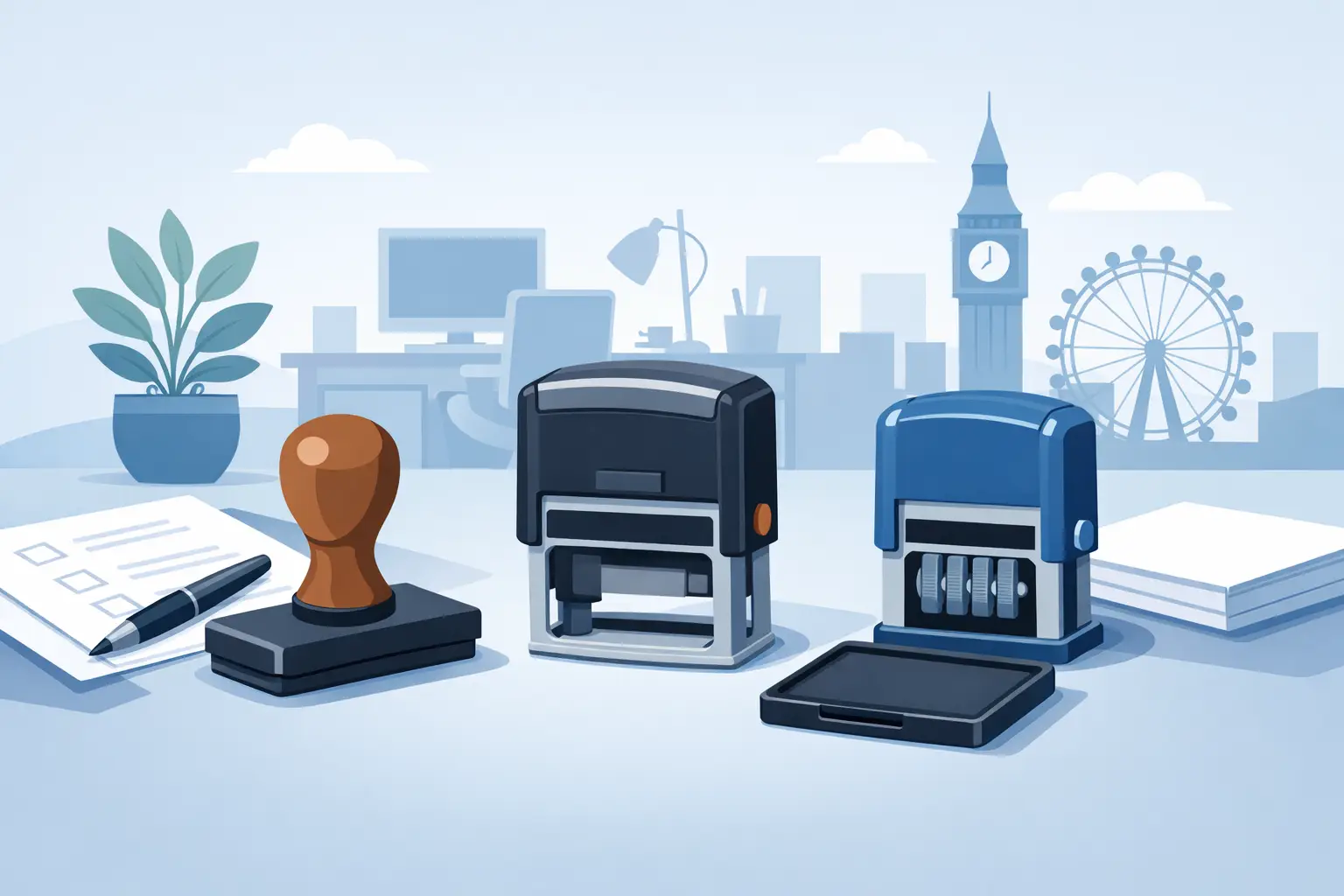
For most workplaces, the main choice is between self-inking stamps and traditional hand stamps. Self-inking stamps suit regular office use because the ink pad is built in, the impression is consistent and the process is quick. They are a strong fit for reception desks, accounts teams, school offices, surgeries, warehouses and admin departments where speed matters.
Traditional hand stamps still have their place. They can be a practical option for lower-volume use, specialist inks or situations where you already have a separate ink pad for a particular surface. They are also often chosen when the mark size is larger or when buyers want a simple, low-maintenance stamp for occasional use.
Date stamps are another category worth considering. If your records depend on timing, adding a date saves a surprising amount of repetition and reduces handwritten errors. This is particularly useful for incoming post, invoices, document control and internal processing. In some settings, combining custom text with a date gives the best balance of clarity and efficiency.
Size matters more than most buyers expect
A stamp that is too small can make text cramped. A stamp that is too large can dominate the page and waste space on forms or letters. The best size is the one that matches both the wording and the document it will appear on.
For simple one-word office marks, a compact stamp is often ideal. It keeps the impression neat and leaves room for signatures, notes or filing references. For business details, return information or multi-line wording, you will need more room so the text stays legible.
If the stamp will be used on forms with designated boxes, check the available space first. This sounds obvious, but it is one of the most common buying mistakes. A clean impression is only useful if it fits where it needs to go.
Think about impression quality, not just the wording
When people shop for stamps, they usually focus on the text. In practice, the impression quality often matters just as much. A stamp that produces a patchy, heavy or blurry mark can slow down admin instead of helping it.
Good impressions depend on several factors: the stamp mechanism, the size of the text, the type of ink and the paper being used. Standard office paper usually works well with standard stamp ink, but glossy surfaces, coated documents and packaging materials can behave differently. If you are stamping anything other than ordinary paper or card, it is worth checking whether a different ink is needed.
This is especially relevant in stockrooms, healthcare settings, garages and trade environments, where surfaces are not always uniform. A stamp that looks fine on copier paper may not perform the same way on labels, job cards or coated documents.
Choosing the right ink colour
Black remains the most practical choice for many offices. It is easy to read, photocopies well and looks formal on records. Blue is also popular, particularly where teams want to distinguish stamped information from printed black text or signatures.
Red is useful when the purpose is visibility – for example, urgent, paid, cancelled or action-needed markings. The trade-off is that very bold colours can be less suitable for records that need to look neutral or professional. Green and other colours may be useful in internal systems, but only if everyone understands what they mean.
The best colour is the one that helps the document move through your process correctly. If colour coding is already part of your office system, a stamp can support that. If not, sticking with black or blue usually keeps things simple.
Custom wording: keep it clear and hard to misuse
Custom office stamps work best when the message is specific enough to be useful but simple enough to read instantly. That usually means avoiding long sentences, unnecessary punctuation and small print.
If more than one person will use the stamp, the wording should be unambiguous. APPROVED may be fine in one office, but APPROVED FOR PAYMENT could be better in another. RECEIVED with space for initials may be more practical than a full sentence. If the stamp supports compliance or internal controls, think carefully about what the mark confirms and what it does not.
This is where a practical supplier can save time. A straightforward layout, sensible text spacing and a stamp size matched to the wording will usually produce better results than trying to fit everything into one design.
When bulk buying makes sense
Some offices only need one or two stamps. Others need the same wording across multiple desks, departments or locations. Bulk buying starts to make sense when consistency matters, when several team members perform the same task, or when you are standardising admin across a business.
It can also help to order replacements or additional units before they become urgent. A single heavily used stamp often becomes a bottleneck if it fails or runs dry at the wrong time. For schools, shared offices, multi-site businesses and workshop environments, having more than one can prevent avoidable delays.
The key is to buy based on actual workflow, not just unit price. A cheaper stamp that needs frequent replacement may not be better value over time than a dependable self-inking model used every day.
Common mistakes this office stamp buying guide can help you avoid
The most common issue is choosing on appearance rather than use. A stamp may look suitable online, but if the wording is too dense, the size is wrong, or the mechanism does not match the volume of use, the result will be disappointing.
Another mistake is not considering who will use it. A front-desk team with constant interruptions needs something quick and reliable. A manager using a stamp occasionally for internal forms may not need the same setup. Likewise, an accounts department processing invoices all day will value consistency and speed more than decorative design.
There is also the question of future use. If your processes are likely to change, highly specific wording can become outdated quickly. In that case, a more flexible phrase or a date stamp might be the better long-term choice.
A practical way to choose with confidence
If you want a simple decision path, start with the task, the volume and the document type. From there, choose the mechanism, the size and the wording. Only then should you think about extras such as colour or duplicate units.
For everyday office use, a self-inking custom stamp is often the most efficient option because it balances speed, clarity and ease of use. For occasional marking or specialist surfaces, a hand stamp may be more suitable. If timing matters, a date stamp can remove another manual step.
Handy Stamps serves many buyers who just want a stamp that works first time, fits the task and arrives quickly without a drawn-out ordering process. That is usually the real goal – less repetition, cleaner paperwork and one less thing slowing the day down.
A good office stamp is a small purchase, but it earns its place when it saves a few seconds on every document and keeps the result clear every time.