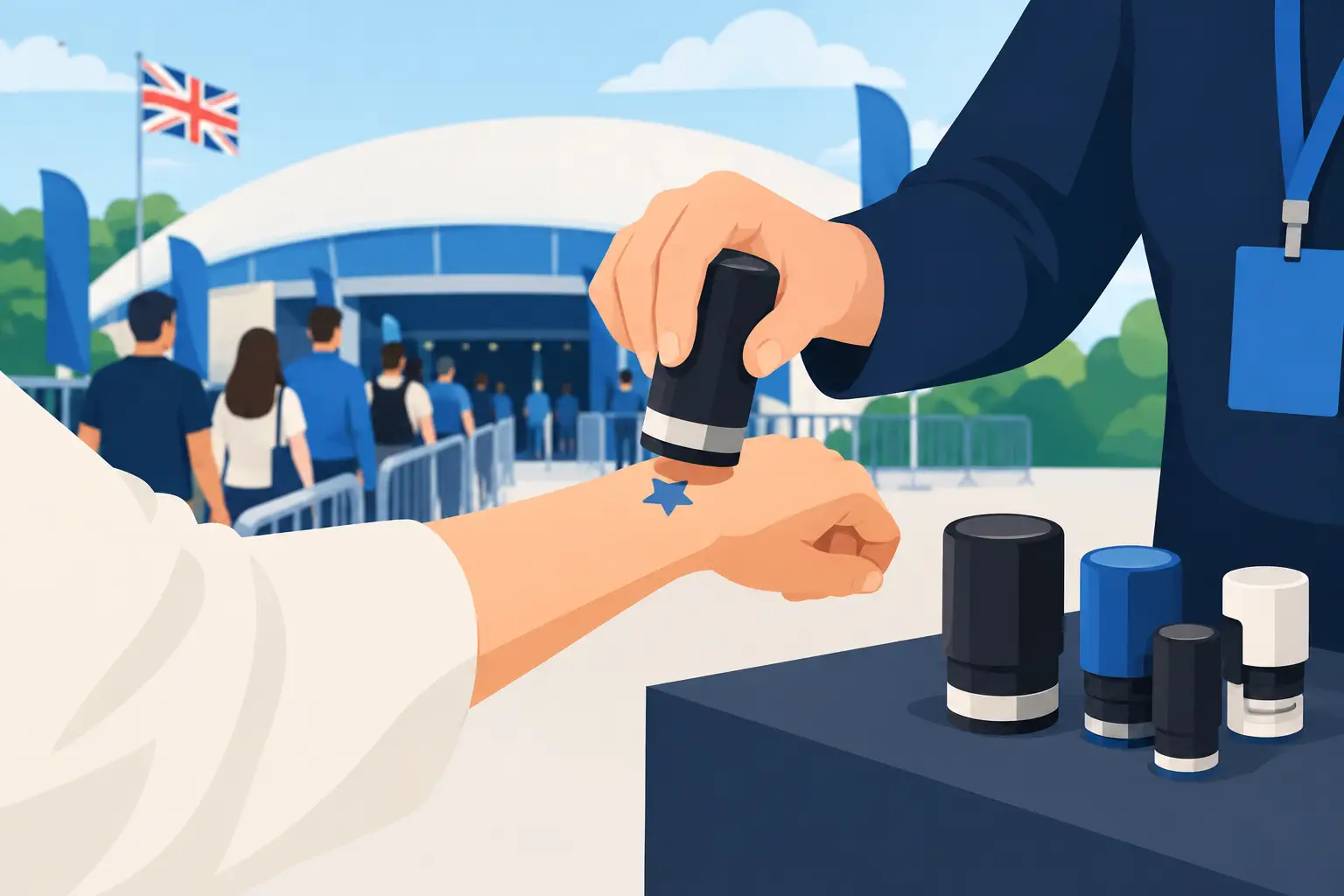
When the doors open and a queue starts to build, entry control needs to be quick enough not to hold people up and clear enough to stop confusion later. The best event entry stamps give staff a simple visual check at the door, bar, backstage area or re-entry point without relying on handwritten tickets or memory.
For a school disco, club night, community fundraiser or large outdoor event, a hand stamp can be one of the most useful items on the admissions table. It is low-cost, fast to apply and difficult to overlook when the right ink, design and process are chosen. The key is matching the stamp to how your event actually operates.
What makes an event entry stamp effective?
A good entry stamp should leave a clean, recognisable mark in one press. That sounds basic, but poor choices can slow down a busy entrance. A design with fine details may look good on screen but become unclear on skin, while an unsuitable ink can fade, smudge or transfer before guests reach the main room.
For most organisers, the best option is a simple custom hand stamp with a bold symbol, initials, date or short event name. The mark should be easy for door staff to identify from a short distance. A distinctive shape can be more useful than a long line of text, particularly in low light or when staff are checking hands quickly.
Consistency matters too. If several members of staff are admitting guests, everyone should use the same stamp, ink and placement. Agreeing this before doors open prevents the awkward situation where one guest is stamped on the wrist, another on the back of the hand and a third receives a mark that cannot be seen under a sleeve.
Best event entry stamps by event type
There is no single stamp that suits every venue. The right choice depends on lighting, expected footfall, whether guests can leave and return, and how much security is needed.
Community events and school functions
For fêtes, charity evenings, school discos and parent association events, a visible ink stamp is usually the most practical solution. A bold logo, star, initial or simple illustration gives volunteers an immediate way to recognise paid entry. These events tend to need a friendly, uncomplicated system rather than a high-security measure.
Use a design with enough open space around the lettering or image. Small, crowded artwork can lose definition when stamped onto skin. If you run several events each year, a reusable stamp with a general design such as the organisation name can offer better value than producing a new dated stamp every time.
Pubs, clubs and late-night events
Busy evening venues often benefit from UV-reactive ink. Under normal lighting, the mark is discreet. Under a UV lamp at the door, bar or re-entry point, it is easy for staff to check. This works well where organisers want to reduce visible marking while keeping admission checks controlled.
UV ink is not a replacement for trained door staff or a proper ticketing process. It is an additional check. It works best when the venue has suitable UV lighting where checks take place and staff know exactly what the approved mark should look like.
For visible stamps in darker venues, choose a high-contrast colour and a clear, uncomplicated design. Test it under the lighting you will actually use, not just in a brightly lit office or hall during set-up.
Festivals, all-day events and re-entry
At a festival or outdoor event, guests may leave the site to collect belongings, use nearby facilities or return after a break. The stamp needs to remain recognisable for the likely duration of admission. Skin type, rain, hand sanitiser and sweat all affect how long any mark lasts, so it is sensible to test your chosen ink before committing to it.
A stamp is particularly useful alongside wristbands or tickets. The wristband may show that a person has paid, while a hand stamp can indicate a specific day, area or re-entry status. For multi-day events, changing the design or ink colour each day makes old entry marks easier to spot.
Backstage, staff and restricted areas
A different stamp can help separate public access from crew, performers, traders or over-18 areas. Keep the design clearly different from the general admission mark. Changing only a tiny piece of text creates unnecessary room for error when staff are working quickly.
For restricted areas, use stamps as one part of your access control. Lanyards, passes and staff briefings may still be needed, especially where safeguarding, licensing or valuable equipment are involved. A stamp is effective for fast recognition, but it should not carry the entire security process on its own.
Choosing visible ink or UV ink
Visible ink is straightforward. Staff can check it anywhere, guests understand what it is for, and there is no need for extra equipment. It is often the sensible choice for daytime events, schools and community venues where the priority is speedy entry rather than discretion.
UV ink is useful where visible marks are less desirable or where a controlled inspection point is already in place. It can look tidier for formal evening events and is harder to assess without the correct light. However, it requires organisers to think ahead. If there is no UV lamp at the re-entry point, its advantage is lost.
Some events use both: a visible mark for general admission and a UV mark for a particular area or age check. This can work, but only if the process remains easy for staff and guests to understand. Too many marks, colours and exceptions can create more delays than they solve.
Design your stamp for a fast check
Event stamps are operational tools first. A detailed event poster, full address or long sponsor list does not belong on a small impression. The most effective designs are bold and purposeful.
A short name, recognisable logo, date, letter or icon is generally enough. Avoid thin lines and very small lettering. Consider the size of the stamp face as well. A slightly larger impression can be easier to inspect, but it should still fit comfortably on the hand or wrist without overlapping watches, jewellery or existing marks.
Before ordering, think about whether your event branding needs to change. A reusable design works well for regular club nights, annual school events and venues with a fixed identity. A dated design is better for one-off events where you need to make yesterday’s stamp clearly invalid. Handy Stamps can produce custom event hand stamps from your chosen wording or artwork, helping organisers keep the admission process clear and consistent.
Set up a process, not just a stamp
Even the clearest stamp will not solve a poorly organised entrance. Decide where guests will be stamped, who applies the mark and when it is checked. At a small event, this may be one person taking payment and stamping the guest immediately. At a larger venue, ticket scanning and stamping may be separate roles to keep the line moving.
Tell guests where the stamp should be placed and ask them not to cover it. The back of the hand is often easiest to inspect, although the wrist can be preferable where guests may need their hands for food, drinks or activities. Keep ink and cleaning materials at the entrance, and ensure staff have a clear example of the approved impression.
It is worth allowing a few minutes before opening to make test impressions. Check that the ink is producing an even mark and that the stamp is not picking up fluff or residue. If you expect a large crowd, have a second stamp and ink pad ready. This is a small precaution that can prevent a queue forming because one item has been misplaced or needs attention.
When a stamp is not the right answer
Entry stamps are excellent for straightforward admission and re-entry checks, but they are not suitable for every situation. Events with named tickets, strict capacity records, age-verification requirements or high-value access may need digital scanning, photographic passes or wristbands as their main control method.
They can still play a useful supporting role. For example, a ticket scan can confirm entry, while a stamp allows fast movement between a venue and outdoor smoking area. The best arrangement is the one that gives your staff confidence without making guests feel processed at every doorway.
A clear stamp, the right ink and a simple staff routine can make entry feel orderly from the first guest onwards. Choose a mark that your team can recognise instantly, test it in real conditions and keep the system uncomplicated enough to work when the queue is longest.