A stamp that saves ten seconds per document can save a surprising amount of time by Friday afternoon. This Trodat Printy stamp review looks at what matters in real use: clear impressions, comfortable handling, practical sizing and the cost of keeping a self-inking stamp working over time.
The Printy range is a familiar choice for offices, schools, small businesses and trade counters because it is designed for repeated, straightforward marking. It is not a specialist industrial tool, and it does not need to be. For everyday tasks such as dating paperwork, adding a business address, marking invoices or giving classroom feedback, it offers a sensible balance of quality, convenience and value.
Trodat Printy Stamp Review: The Key Points
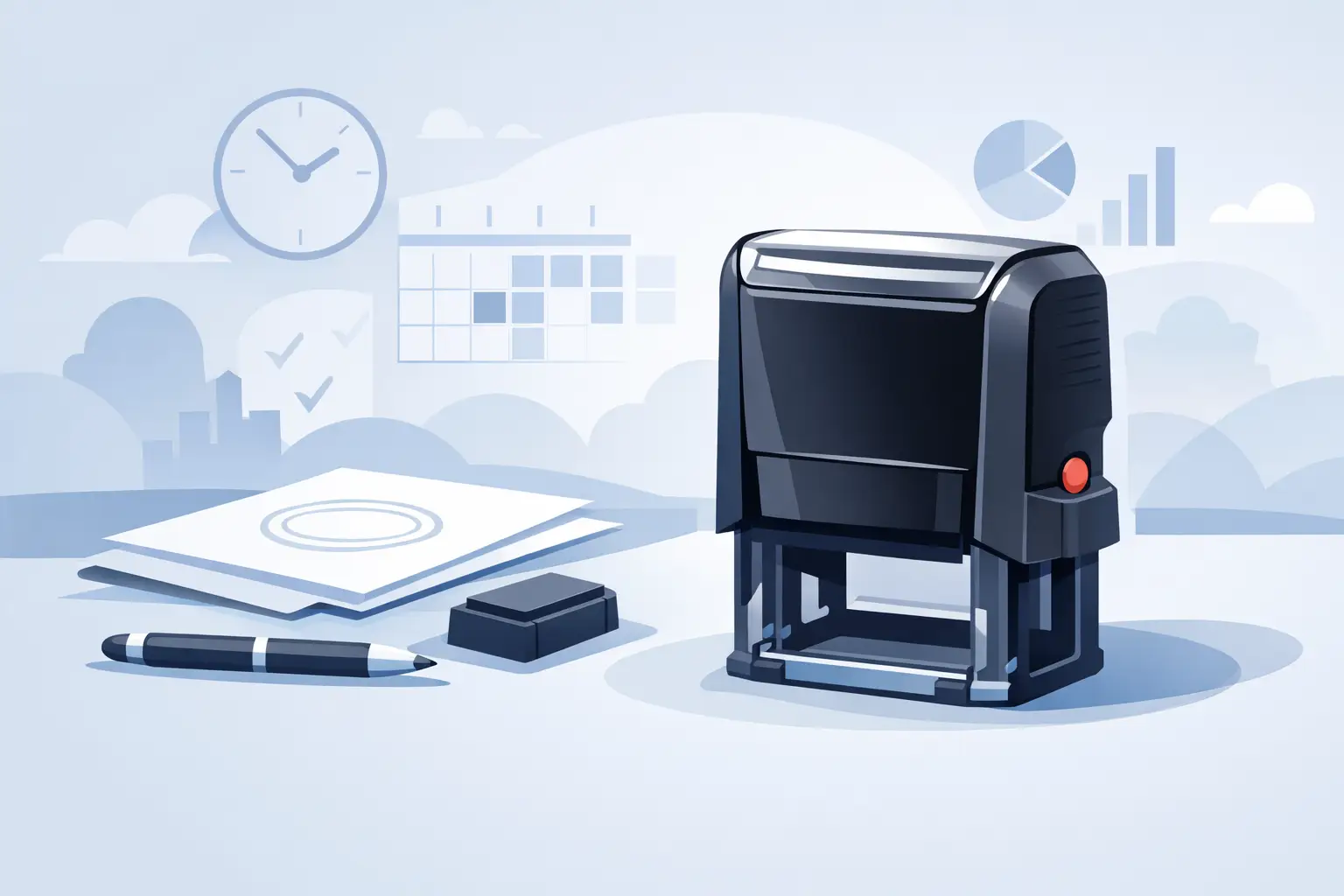
A Trodat Printy is a self-inking stamp. The ink pad sits inside the stamp body, so the stamp re-inks itself after each impression. That removes the need for a separate ink pad and keeps the process quick and tidy when there is a pile of paperwork to get through.
The main benefit is consistency. With a correctly made text plate and a suitable pad, the stamp produces neat, repeatable impressions without the uneven coverage that can occur with a traditional hand stamp. The casing is lightweight, but it is made for routine desk use rather than occasional novelty stamping.
For most buyers, the choice comes down to three things: the amount of text or artwork required, the size of the available marking area, and how many impressions the stamp will make in a typical week. Getting these right matters more than choosing the largest possible stamp.
Impression Quality in Everyday Work
A good stamp impression should be legible at a glance. On ordinary office paper, Trodat Printy stamps generally give clear text with defined edges, provided the stamp is pressed straight down onto a firm, flat surface. Small lettering can work well, but very fine artwork, compressed text or lengthy wording will always be harder to read than a simple, well-spaced layout.
This is particularly relevant for address stamps and company details. A crowded design may technically fit, yet it can look busy on delivery notes, forms and envelopes. In practice, a business name, key contact details and perhaps a logo are often more useful than trying to include every possible line of information.
The same principle applies in schools. Teacher stamps work best when the message is brief and direct, such as “Well done”, “Please see me” or “Excellent effort”. A clear message is faster for pupils to recognise and more useful for the teacher marking a full set of books.
Paper choice also affects the result. Standard uncoated paper is straightforward. Glossy labels, coated cards and heavily textured stock can resist or distort ordinary stamp ink. If you need to mark difficult surfaces, discuss the material and application before ordering, as a standard self-inking stamp may not be the right tool.
Design and Handling
The Printy’s compact plastic body is one of its practical strengths. It is easy to keep in a desk drawer, on a reception counter or beside a till, and it does not take much effort to operate. The stamp is also enclosed when not in use, which helps prevent loose ink from marking the desk or other items in storage.
Its light weight is useful for normal administrative work, but it comes with a trade-off. Someone making very high volumes of impressions throughout a shift may prefer a heavier-duty self-inking model with a more substantial mechanism. For a busy office, school department, estate agency or garage reception, however, a Printy is usually well suited to the workload.
The stamp should be used with a deliberate, even press. There is no need to force it down. Excessive pressure does not improve the impression and can lead to blurred edges, especially if the paper is on an uneven surface. A clipboard, padded desk mat or pile of forms can all affect the result.
Choosing the Right Size
Trodat Printy models are available in a range of impression sizes, from compact formats for short messages to larger options for addresses, tables, logos and multiple lines of text. Smaller sizes are ideal for dates, initials, approval messages and loyalty cards. Medium formats tend to suit business addresses, workshop service stamps and standard office wording. Larger formats are more appropriate where a logo and several lines need to sit together clearly.
It is worth choosing for readability rather than filling every millimetre of the stamp face. Leave sensible spacing between lines, avoid unnecessarily decorative fonts and make sure the most important information is prominent. This is especially useful for stamps used by several members of staff, where the goal is quick, consistent marking rather than an elaborate design.
Ink Pads, Refills and Ongoing Cost
One of the practical advantages of the Trodat Printy system is that its internal ink pad can be replaced. When impressions become faint, changing the pad is usually cleaner and more reliable than attempting to add ink to an old one repeatedly. A replacement pad also helps keep the colour consistent, which matters for customer-facing paperwork and records.
Black is the standard choice for most office and administrative uses because it is clear, professional and easy to photocopy. Blue, red, green and violet can be helpful where colour has a job to do. A garage may use different colours for inspection stages, while a school department may use a particular colour for feedback or acknowledgement. The best option depends on whether the colour improves the process rather than simply making the page busier.
Replacement pads make a Printy a better long-term purchase than a disposable item. The casing and text plate remain in use, while the consumable component is changed when needed. Actual pad life varies with the ink colour, paper type, stamp design and pressure used, so it is sensible to keep a spare for stamps used every day.
Where a Trodat Printy Works Best
The Printy range is at its best where the same information needs to appear repeatedly and neatly. Typical uses include invoice and address marking, “Paid” or “Received” wording, school feedback, loyalty cards, appointment reminders, document control and workshop service records.
For small businesses, a custom Printy can make routine paperwork look more organised without adding another complicated system. For teachers and administrators, it reduces repetitive handwriting while still leaving room for personal notes where they are needed. For trades and garages, it provides a quick way to show dates, checks, service details or completion status.
There are limits. If a stamp will be used outdoors, on rough timber, metal, plastic or other non-porous materials, a standard self-inking office stamp may not deliver the required result. Likewise, a very large image, highly detailed logo or continuous production-line use may call for a different stamp type. Choosing the tool around the job prevents disappointment later.
Is It Good Value?
For routine marking, value is not only the purchase price. It is also the time saved, the clarity of records and the ability to replace the ink pad rather than replace the full stamp. A well-specified Trodat Printy can serve as a reliable everyday item for a long period, particularly when it is stored properly and used on suitable paper.
The best value comes from ordering a layout that staff can read and use without thinking. A clear “PAID” stamp that is used hundreds of times is more useful than a complicated design with details nobody notices. The same applies to address stamps: prioritise what the recipient or colleague needs to see first.
When ordering from a specialist supplier such as Handy Stamps, provide the wording exactly as it should appear and check telephone numbers, postcodes and email addresses carefully. The stamp will reproduce the approved design every time, so a quick check before production avoids repeating an error on every form.
Final Verdict
The Trodat Printy is a dependable choice for ordinary, repeated stamping where clean impressions and quick operation matter. It is particularly effective for office teams, teachers, service desks and small businesses that need a compact self-inking stamp without unnecessary complexity.
Choose a size that gives your wording room to breathe, use it on a firm surface and keep a replacement pad available for frequently used stamps. Those small decisions will do more for day-to-day results than adding extra lines of text ever will.