Paperwork tends to reveal where time is being lost. If the same wording is written by hand all day, or a team keeps reaching for labels to repeat the same message, a self-inking office stamp usually fixes the problem quickly. It gives you a clear, consistent mark in seconds, which is exactly what most busy offices need when admin has to move without fuss.
For many workplaces, the appeal is simple. A stamp is faster than handwriting, tidier than a rushed note, and more reliable than printing one-off labels for routine tasks. Whether you are marking invoices, signing off internal documents, confirming dates received or applying company details, the right stamp reduces repetition without adding complexity.
Why a self-inking office stamp works so well
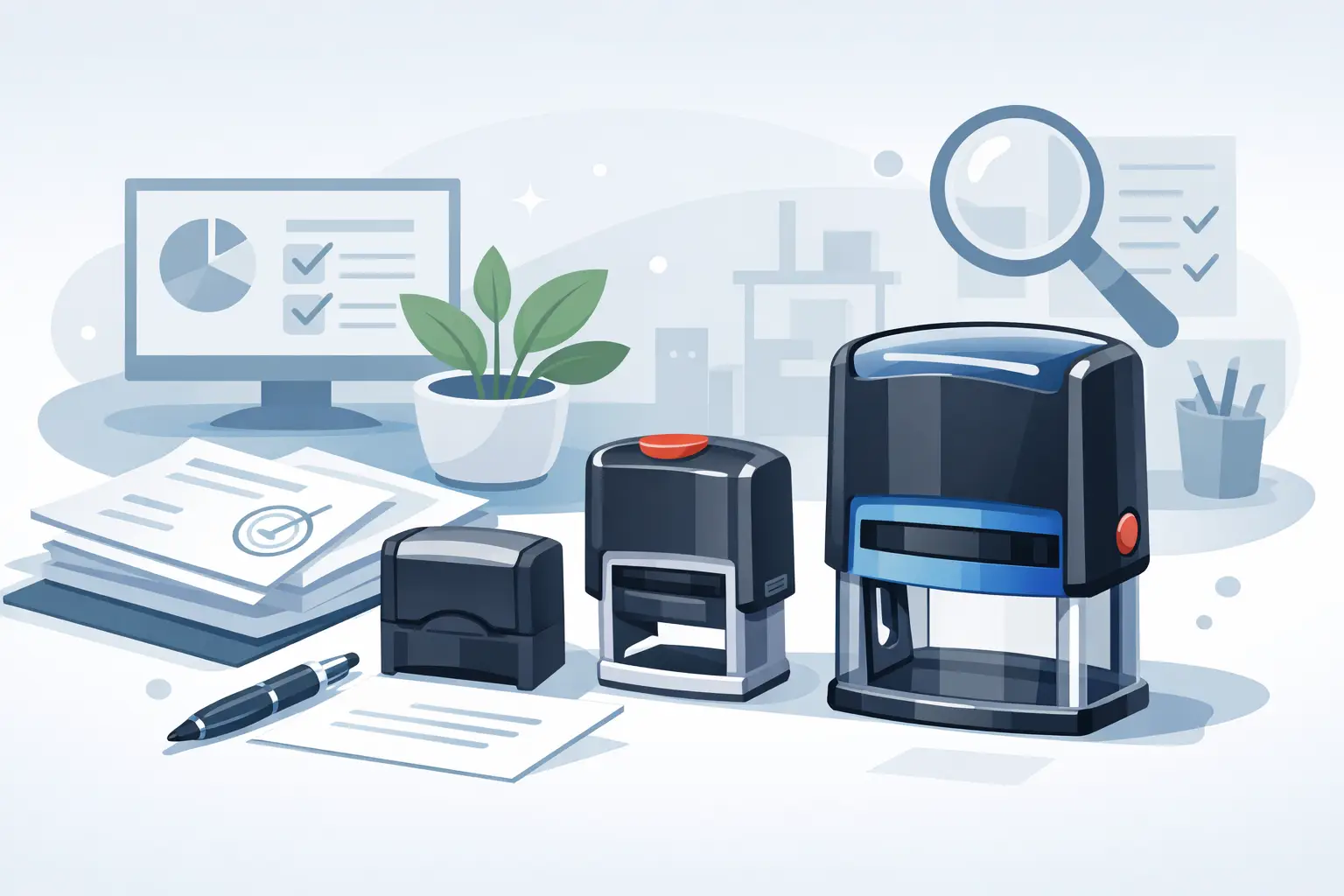
A self-inking design keeps the ink pad built into the stamp body, so each impression is re-inked automatically after use. That matters in a real office because it removes the extra step of using a separate pad and helps keep desks cleaner. It also means the stamp is ready to use whenever someone needs it, which is particularly useful in shared admin areas, reception desks and finance teams.
There is also a consistency benefit that often gets overlooked. Handwritten notes vary from person to person and even from hour to hour. A stamp gives the same layout each time, which helps documents look more professional and makes information easier to read at a glance. In settings where speed and accuracy matter, that consistency is not just about appearance. It reduces errors, avoids ambiguity and supports better record keeping.
Another practical point is durability. A good self-inking stamp is designed for repeated daily use, so it suits offices that process a steady stream of forms, envelopes or internal paperwork. For occasional use, almost any stamp may do the job. For regular use, build quality and impression quality make a noticeable difference over time.
Common uses for a self-inking office stamp
The most obvious use is for standard office wording such as APPROVED, PAID, RECEIVED or CONFIDENTIAL. These messages are used repeatedly, and stamping them is simply more efficient than writing them out by hand. Date stamps are also a common choice where incoming post, purchase orders or customer documents need a clear record.
Custom business details are another strong fit. A company name, address, registration number or contact details can be applied neatly to documents, forms or packaging inserts. For smaller businesses in particular, this can save time without the cost or storage demands of printed stationery for every variation.
There are more specialised uses too. Solicitors, accountants, schools, garages and medical or care settings often need standard text for internal processes, document tracking or compliance checks. In those cases, the stamp becomes part of a routine system rather than just a convenience. That is when choosing the right format matters most.
What to look for before you order
The best stamp is not always the biggest or the cheapest. It depends on what you need it to say, how often it will be used and where it will be used.
Size and layout
Start with the amount of text. A simple one-word stamp needs very little space, but a business address or multi-line message needs a larger plate to stay legible. Trying to squeeze too much information into a small stamp usually leads to cramped text and poor readability. If the impression has to be understood quickly, clarity comes first.
Think about the surface area of the documents too. A large stamp may work well on A4 paperwork, but it can feel oversized on small labels, receipts or compact forms. If you stamp envelopes regularly, the format needs to sit neatly without dominating the page.
Frequency of use
If the stamp will be used a few times a week, most standard self-inking models will be fine. If it is going to be used dozens or even hundreds of times a day, reliability becomes more important. A stronger casing, smooth mechanism and dependable impression are worth paying for because they save frustration later.
Busy teams also benefit from stamps that are easy to grip and simple to identify on a desk. When several stamps are in use at once, a clear top label or visible wording helps avoid mistakes.
Ink colour
Black is the standard choice for most offices because it is clear, formal and easy to photocopy or scan. Blue is also widely used, particularly where a mark needs to stand out slightly from printed black text while still looking professional.
Red can be useful for urgent or high-visibility wording such as CANCELLED or COPY, but it is not right for every environment. If documents are scanned regularly, or if the stamp needs to sit neatly within formal paperwork, black or blue is usually the safer option.
Replaceable pads and long-term value
A self-inking office stamp is not just a one-off purchase. Over time, the ink pad will need replacing, especially in higher-volume settings. Choosing a stamp with replaceable pads makes more sense than treating the whole unit as disposable. It keeps costs sensible and means you can continue using a stamp body that already fits your workflow.
Choosing between standard and custom wording
A standard wording stamp is the quickest option when your needs are simple and common. If you only need messages such as PAID, FILE COPY or RECEIVED, a standard format keeps things straightforward.
Custom wording is better when the stamp needs to match your business process exactly. That might mean including a department name, a return address, a signature line, a reference box or wording specific to your organisation. In many offices, custom stamps are what turn a useful accessory into a proper time-saver because they fit the task rather than forcing the task to fit the stamp.
There is a trade-off here. Standard stamps are often easier to choose because the decision is already made for you. Custom stamps need a little more thought at the ordering stage. But if the impression is going to be used every day, taking that extra minute to get the wording right usually pays back very quickly.
Where offices often get it wrong
One common mistake is ordering based on text alone and not considering impression size. A long block of text may technically fit, but if staff have to squint to read it, the stamp is not doing its job.
Another issue is buying for occasional use when the reality is heavy use. A reception desk, accounts team or school office tends to put far more wear on a stamp than expected. If several people will use it throughout the day, choose something built for that level of handling.
It is also easy to overlook the paper you are stamping on. Smooth office paper behaves differently from cardboard, labels or glossy surfaces. Most office stamps perform best on standard paper stocks. If your materials vary, it is worth checking suitability rather than assuming one stamp will handle every surface equally well.
A self-inking office stamp for different workplaces
Office administrators usually need efficiency above all else. Clear date stamps, approval stamps and address stamps help keep paperwork moving and reduce repetitive writing.
Professional firms often value presentation as much as speed. In legal, financial and consultancy settings, a neat impression supports a more ordered document trail and reduces the scrappy look that handwritten notes can create.
Schools and education departments use stamps slightly differently, but the same logic applies. Repeated messages, dates and internal processing marks are quicker to apply and easier to read when they are standardised.
For smaller businesses, the benefit is often about doing more with fewer steps. A stamp can cover routine tasks without the need for separate printed materials or repeated manual input. That makes it a useful tool for front desks, packing areas and home offices alike.
Making the buying process simpler
When choosing a stamp, it helps to begin with one question: what exact job should this stamp remove from the day? Once that is clear, the rest follows more easily. You can decide whether you need a standard phrase or custom text, how large the impression should be and whether it will be used occasionally or constantly.
That practical approach is usually the best one. At Handy Stamps, the aim is not to make stamp buying feel complicated. It is to help customers get a dependable tool that does the job properly, arrives promptly and keeps everyday admin moving.
A well-chosen stamp is a small piece of equipment, but in a busy office it earns its place very quickly. If it saves time, keeps paperwork neat and removes a repetitive task from the day, it is already doing exactly what it should.