
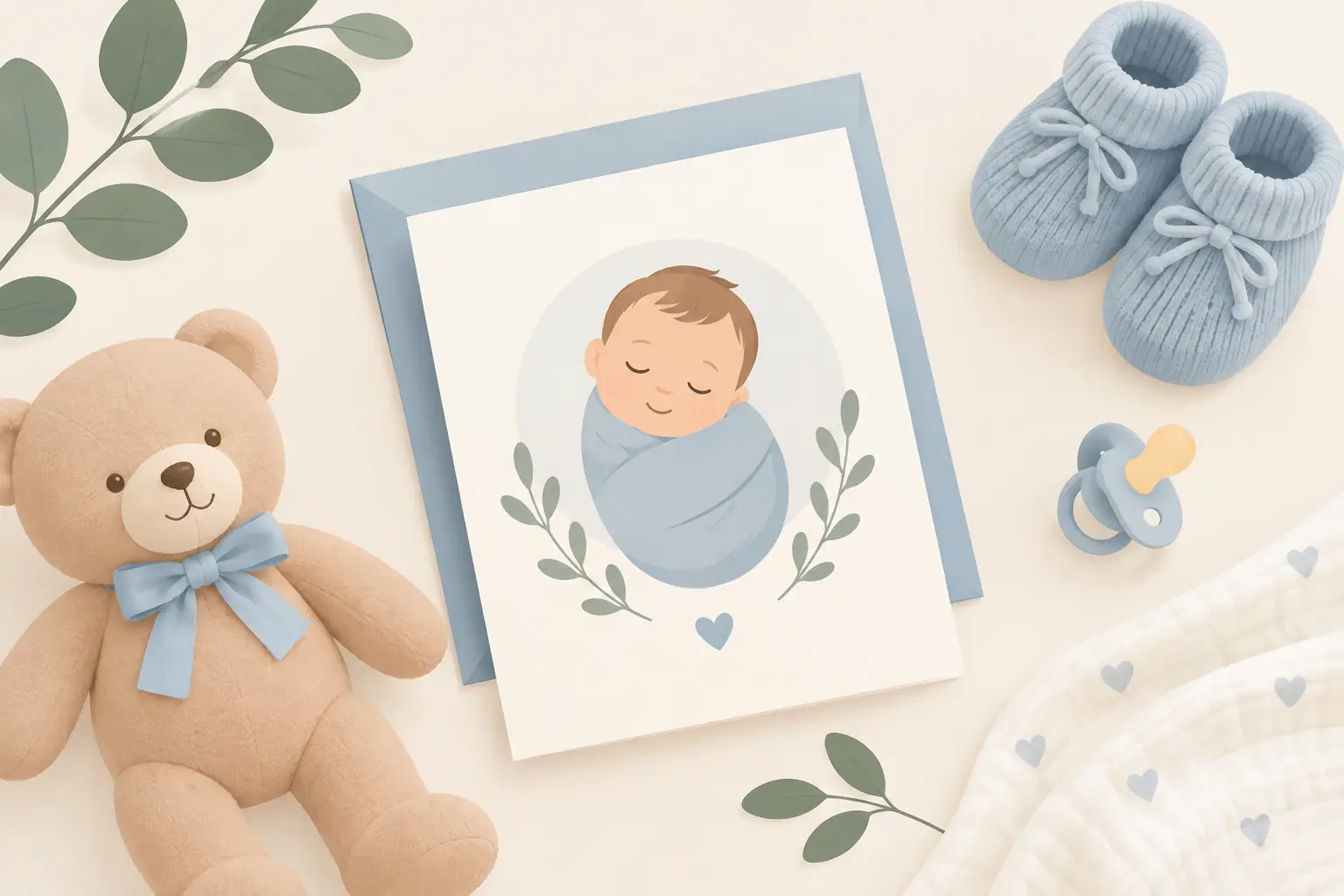
The first few days with a new baby rarely run to a timetable. Between feeds, visitors, paperwork and very little sleep, a carefully planned card can quickly become one more job. This guide to personalised baby announcements is designed to keep that job simple, while helping you create something family and friends will genuinely want to keep.
A good announcement does not need a long message or elaborate design. It needs the right information, a clear personal touch and a format that suits how you want to share your news. Whether you are posting cards, sending a digital version or preparing small keepsakes for visitors, a little advance planning makes the process much easier.
Start with the details people will want to know
Most baby announcements include the baby’s full name, date of birth and weight. Parents may also add the time of birth, length, place of birth or the names of siblings. There is no fixed rule, though. If you would rather keep certain details private, simply leave them out.
Before choosing a design, write down the wording you would like to use. This avoids ordering a design that does not have room for the details that matter to you. It also helps if one parent is handling the ordering while the other is busy with the baby.
For a traditional card, simple wording often works best:
“Introducing Florence May Taylor, born 14 June 2026, weighing 7lb 4oz.”
For a warmer, more informal note, you could write:
“Our little family has grown. Welcome to the world, Noah James, born 14 June 2026.”
If you are announcing twins, adopted children or a baby joining a blended family, personalise the message around your own circumstances. The purpose is to share happy news, not to fit a standard template.
Choose a format that suits your real life
Printed cards are still popular because they feel personal and give relatives something physical to display or keep in a memory box. They work particularly well for grandparents, older relatives and friends who may not be active on social media. A postcard-style card is practical for larger mailing lists, while folded cards give you more space for a photograph and a handwritten note.
Digital announcements are quicker and can be sent the same day. They are useful for colleagues, distant friends and group chats, especially if you do not want to collect postal addresses. The trade-off is that they can disappear quickly among other messages. Many parents use both: a digital announcement for immediate news and a printed card for close family and friends.
Keepsake announcements offer another option. A small wooden token, engraved gift or stamped favour can mark the occasion for godparents, grandparents or visitors. These are best reserved for a shorter list, as they take more preparation than a card. The value is in making each item feel considered, rather than producing a large quantity.
Pick a design that will still feel right later
It is easy to be drawn towards busy designs, especially when there are so many baby-themed choices available. In practice, a clean layout often produces the best result. It keeps the name and birth details easy to read, allows a photograph to stand out and is less likely to date quickly.
Soft colours, simple illustrations and good spacing are dependable choices. A neutral design can be especially useful if you are preparing some elements before the birth and do not know the baby’s sex or final name. If you already have a nursery theme, favourite animal or family motif, bringing in one small reference can make the announcement feel more personal without making it overcrowded.
Think about how the finished item will be used. A card displayed on a mantelpiece needs a clear front design. A keepsake tag may need larger text because the available space is limited. If you are using a personalised stamp, fine detail and very small lettering may not reproduce as clearly as a simple name, date or short message.
When a photo is worth including
A newborn photograph can make an announcement feel immediate and personal, but it is not essential. Some parents prefer a close-up of tiny hands or feet, a picture of the cot, or no image at all. If you use a photo, choose one with natural light and a clear subject rather than worrying about a perfect pose.
Check that the image is sharp enough for printing. A photo that looks fine on a mobile phone screen can appear soft or dark when printed. Leave enough room around the image so that cropping does not cut off important details. If you are sending the announcement several weeks after the birth, that is perfectly acceptable too. A calm, settled photo at home can be more meaningful than one taken in a rush.
Use personalised touches with purpose
Personalisation is most effective when it makes repeated tasks quicker or gives the finished item a recognisable family touch. A custom stamp can be useful for envelopes, thank-you notes, favour bags and small tags. For example, a simple design featuring the baby’s first name and a short message such as “Thank you for welcoming me” can be used across several items.
This approach is often more practical than trying to handwrite the same wording dozens of times. It also gives a consistent, clean impression on plain cards, kraft tags or wrapping paper. Keep the wording short, particularly on smaller stamp sizes. A name, date and small motif will usually print more clearly than a full paragraph.
Handy Stamps can provide personalised designs for new baby celebrations, making it easier to add the same detail to cards and keepsakes without creating unnecessary extra work. If you are ordering a stamp, check the preview carefully for spelling, dates and layout before approving it. These are the details people notice later.
Plan the timing without putting pressure on yourselves
There is no deadline for sending a baby announcement. Some families share the news immediately, while others wait until they are home, settled or ready to introduce the baby more widely. A delayed announcement is not less thoughtful. Most people will simply be pleased to hear your news.
If you would like cards to go out soon after the birth, prepare what you can beforehand. Choose the card style, create an address list and write any return addresses in advance. Leave the baby’s name, date, weight and photograph until after arrival. This keeps the final task manageable.
It can also help to divide the list into groups. Close family may receive a call or message first. Friends and colleagues can receive a card or digital announcement later. This avoids feeling as though every person must be contacted at once, particularly when you need rest and time together as a family.
Check the practical details before ordering
A beautiful announcement is less useful if the text is difficult to read or the envelopes are the wrong size. Before finalising your order, check the spelling of every name, the date format and whether weights are shown in pounds and ounces, kilograms or both. For UK recipients, pounds and ounces remain familiar, but use whichever measurement feels right for your family.
Order a few more cards or tags than you think you need. You may remember someone later, want to keep one for a memory box or make a mistake when addressing an envelope. Extras are also useful if grandparents would like a copy to send to their own friends.
For stamps, consider the surface you plan to mark. Smooth card and paper give the clearest result. Textured materials, curved items and absorbent wood can produce a more varied impression, which may be part of the charm but is worth testing first. Always make a few practice impressions on spare card before working on the final pieces.
Make room for thank-you notes later
A baby announcement and a thank-you card do not need to be the same thing, but planning them together can save time. If you receive gifts, flowers or meals from family and friends, a short note is a thoughtful response. A matching card design or personalised stamp can make these notes feel connected without needing a separate project.
Keep the message brief and genuine: thank the person for their kindness, mention the gift if appropriate, and sign it from the family. If you are tired or overwhelmed, ask a partner or relative to help with addressing and posting. The people who care about you will understand that a reply may take time.
The best announcement is the one that feels like your family and does not add strain to an already busy few weeks. Choose a format you can manage, keep the message clear, and save one finished card or keepsake for yourselves. Years from now, those small details may bring back far more than the date and weight.